

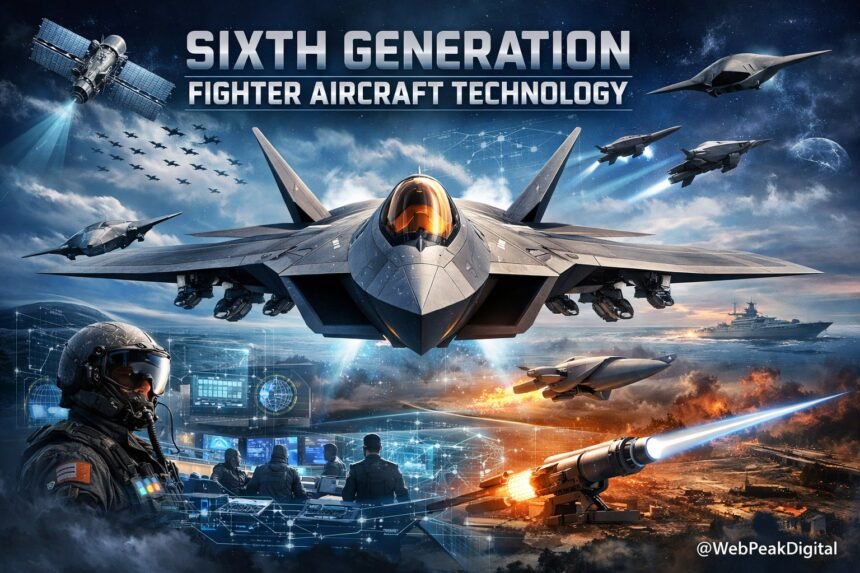
Sixth-generation fighter programs represent a shift in how air combat capability is defined and delivered. These aircraft are not being developed as standalone platforms, but as part of a broader combat system that blends crewed aircraft, autonomous assets, sensors, data networks, and software-driven capabilities. The focus is on operating effectively in highly contested environments where traditional advantages like speed or altitude alone are no longer enough.
At the center of this shift is sixth generation fighter aircraft technology, which prioritizes information dominance, adaptability, and system-level integration over single-aircraft performance. Instead of relying on fixed hardware advantages, these platforms are designed to evolve through software updates, modular components, and continuous integration with unmanned systems and joint-force networks, allowing air forces to respond faster to changing threats and operational demands.
What Is Sixth Generation Fighter Aircraft Technology
Definition and scope of sixth-generation combat aircraft
Sixth-generation combat aircraft are next-generation air dominance platforms designed as part of a wider combat system, not as standalone jets.
They combine crewed aircraft, autonomous systems, sensors, weapons, and networks into a single operational ecosystem.
- Designed for operations in highly contested airspace
- Built to work alongside unmanned systems and space-based assets
- Focused on information control, survivability, and decision speed
How sixth-generation fighters differ from fifth-generation jets
Sixth-generation fighters differ by prioritizing system integration and autonomy over individual aircraft performance.
Fifth-generation jets focus on stealth and sensor fusion, while sixth-generation platforms extend control across multiple assets.
- Optional crewed or uncrewed operation
- Direct control of unmanned aircraft
- Deeper AI involvement in combat decisions
- Broader integration with joint and allied forces
Why “technology-centric” design defines this generation
This generation is defined by software, data, and system architecture rather than airframe alone.
Capabilities are expected to evolve through updates instead of major hardware changes.
- Software-driven mission systems
- Open architectures for rapid upgrades
- Continuous capability growth across the aircraft lifecycle
How Sixth Generation Fighter Systems Operate
Integrated manned and unmanned combat operations
Sixth-generation systems operate by pairing crewed aircraft with multiple unmanned platforms.
The crewed fighter acts as a command node rather than the sole combat asset.
- Crewed aircraft manages mission intent
- Unmanned systems execute sensing, jamming, or strike tasks
- Risk is distributed away from pilots
AI-assisted mission planning and execution
AI supports planning, threat evaluation, and in-mission decision support.
Human operators retain control while AI handles speed-intensive tasks.
- Threat prioritization and route optimization
- Dynamic mission replanning during combat
- Automated sensor and weapon management
Network-centric battlefield coordination
These fighters rely on secure, high-bandwidth networks to share data across domains.
Success depends on information flow, not just individual performance.
- Real-time data exchange with air, land, sea, and space assets
- Shared situational awareness across forces
- Resilience against jamming and cyber attack
Core Technologies Powering Sixth Generation Fighters
Advanced stealth and multi-spectral survivability
Sixth-generation survivability extends beyond radar stealth alone.
Aircraft are designed to minimize detection across multiple sensor types.
- Reduced radar, infrared, acoustic, and visual signatures
- Adaptive materials and emissions control
- Survivability focused on avoidance, not just countermeasures
Artificial intelligence and autonomous decision systems
AI systems assist or execute tasks traditionally handled by pilots.
Autonomy is task-based rather than fully independent.
- Automated threat recognition
- Decision-support for weapons and maneuvering
- Scalable autonomy depending on mission risk
Sensor fusion and real-time data dominance
Sensor fusion creates a single, coherent picture from multiple inputs.
This allows faster and more accurate decisions under pressure.
- Integration of onboard and offboard sensors
- Automated correlation of targets and threats
- Reduced pilot workload during complex engagements
Adaptive propulsion and next-generation power systems
Propulsion systems are designed for efficiency, range, and power generation.
Engines support both performance and onboard energy demands.
- Variable-cycle engines for different mission phases
- Increased electrical power for sensors and weapons
- Improved range and thermal management
Role of Human-Machine Teaming in Air Combat
Pilot-AI collaboration models
Human-machine teaming places the pilot as a mission commander, not a systems operator.
AI handles execution details while humans set intent.
- Human oversight of critical decisions
- AI manages speed-sensitive tasks
- Clear authority boundaries between human and machine
Loyal wingman drones and swarm coordination
Unmanned wingmen extend sensing, protection, and strike options.
They operate under human direction with varying autonomy levels.
- Forward sensing and electronic warfare roles
- High-risk missions without pilot exposure
- Coordinated actions across multiple drones
Reduced cognitive workload for pilots
Automation reduces information overload in high-threat environments.
Pilots focus on judgment rather than system management.
- Simplified cockpit interfaces
- Automated alerts and recommendations
- Fewer manual inputs during combat
Why Sixth Generation Fighter Technology Matters
Air superiority in contested and denied environments
These systems are built to operate where traditional aircraft struggle.
They address advanced air defenses and electronic warfare threats.
- Penetration of integrated air defense systems
- Survivability against modern sensors
- Sustained operations in hostile airspace
Strategic deterrence and global power projection
Sixth-generation platforms signal long-term military capability.
They shape adversary calculations without constant deployment.
- Deterrence through technological advantage
- Rapid response options across regions
- Reduced reliance on forward basing
Shift toward multi-domain warfare integration
Air combat is no longer isolated from other domains.
These fighters function as part of a broader operational network.
- Integration with space and cyber operations
- Coordination with naval and ground forces
- Unified command across domains
Benefits for Military Forces and Defense Stakeholders
Operational advantages for air forces
Air forces gain flexibility, survivability, and decision speed.
Operations become more adaptive and resilient.
- Reduced pilot risk
- Expanded mission options
- Faster response to changing threats
Strategic benefits for defense planners
Planners gain scalable capabilities rather than fixed platforms.
Force structure becomes more adaptable over time.
- Modular force design
- Easier integration of new technologies
- Long-term modernization paths
Long-term value for national security ecosystems
These programs support broader defense and industrial bases.
They influence technology development beyond aviation.
- Advancement in AI and secure networking
- Industrial resilience and skilled workforce development
- Cross-domain defense innovation
Design and Development Best Practices
Modular and open-architecture system design
Open architectures allow components to be replaced or upgraded easily.
This reduces long-term dependency on specific vendors.
- Standardized interfaces
- Interoperable subsystems
- Faster integration of new capabilities
Software-driven capability upgrades
Software updates deliver new functions without redesigning hardware.
This shortens upgrade cycles and reduces cost.
- Incremental feature releases
- Rapid response to emerging threats
- Continuous improvement across service life
Survivability-first engineering approaches
Design decisions prioritize mission survival over raw performance.
This shifts focus toward resilience and adaptability.
- Redundant systems
- Degraded-mode operations
- Emphasis on mission continuation
Regulatory, Security, and Program Requirements
Defense acquisition and compliance standards
Programs must meet strict government acquisition rules.
These standards shape timelines and design decisions.
- Multi-phase development approvals
- Cost and performance reporting
- Independent testing and evaluation
Cybersecurity and data protection requirements
Digital dependence increases exposure to cyber threats.
Security is treated as a core system requirement.
- Encrypted communications
- Secure software supply chains
- Continuous vulnerability monitoring
Export controls and international defense regulations
Technology sharing is tightly regulated.
Programs must align with national and alliance policies.
- Controlled technology transfer
- Compliance with international agreements
- Restrictions on partner access
Common Risks and Challenges in Sixth Generation Programs
Cost overruns and program complexity
System-of-systems design increases development risk.
Costs rise when requirements change mid-program.
- Integration challenges
- Long development timelines
- Budget pressure from parallel priorities
AI reliability and ethical constraints
AI systems must be trusted under combat conditions.
Ethical use remains a policy and legal concern.
- Explainability of AI decisions
- Human control requirements
- Rules of engagement alignment
Interoperability and system integration risks
Poor integration limits operational value.
Interoperability must be planned from the start.
- Compatibility with legacy systems
- Allied force integration
- Data standard alignment
Tools, Systems, and Enabling Technologies
Digital twin and simulation environments
Digital twins replicate aircraft behavior in virtual space.
They support testing, training, and upgrades.
- Faster design validation
- Reduced physical testing costs
- Ongoing performance monitoring
Advanced avionics and command-and-control systems
Avionics act as the aircraft’s decision backbone.
Command systems link assets across domains.
- Integrated mission computers
- Adaptive displays
- Centralized control logic
Secure communication and battlefield networking tools
Networking tools enable real-time coordination.
Security and resilience are essential.
- Jam-resistant data links
- Redundant communication paths
- Dynamic network routing
Evaluation Checklist for Sixth Generation Fighter Capabilities
Survivability and stealth assessment
Survivability determines mission success.
Evaluation focuses on detection avoidance and resilience.
- Multi-spectral signature reduction
- Electronic protection effectiveness
- Redundancy and recovery features
Autonomy and AI maturity indicators
AI capability must match mission needs.
Assessment balances automation with human control.
- Level of task autonomy
- Reliability under stress
- Transparency of AI recommendations
Network integration and scalability factors
Scalability supports future growth.
Networks must handle expansion without redesign.
- Interoperability with allied systems
- Data throughput capacity
- Resilience under attack
Comparison With Fifth Generation Fighter Aircraft
Capability differences and performance gaps
Sixth-generation systems extend beyond platform performance.
The focus shifts from aircraft to operational ecosystem.
- Broader mission control
- Higher autonomy levels
- Deeper integration across forces
Operational doctrine evolution
Doctrine evolves to exploit new capabilities.
Command structures and training adapt accordingly.
- Distributed operations
- Reduced reliance on single assets
- Emphasis on information dominance
Cost, flexibility, and lifecycle considerations
Sixth-generation platforms aim to trade upfront cost for long-term value.
Flexibility reduces expensive redesigns.
- Higher initial development costs
- Lower upgrade and adaptation costs
- Longer operational relevance
Frequently Asked Questions (FAQs)
What is sixth generation fighter aircraft technology?
Sixth generation fighter aircraft technology refers to the integrated systems, software, and operational concepts behind next-generation air combat platforms, combining crewed fighters, autonomous systems, advanced sensors, AI-driven decision support, and secure networks into a single combat ecosystem.
How are sixth-generation fighters different from current fifth-generation jets?
They move beyond individual aircraft performance and focus on system-level operations, including manned–unmanned teaming, higher levels of autonomy, deeper network integration, and continuous capability upgrades through software.
Will sixth-generation fighters replace all existing combat aircraft?
No, they are expected to operate alongside existing fleets, complementing fifth-generation and legacy aircraft by acting as command nodes and high-end capability platforms in complex missions.
When are sixth-generation fighters expected to become operational?
Most current programs target initial operational capability in the 2030s, with timelines influenced by funding, testing outcomes, and integration challenges.
Are sixth-generation fighters designed to operate without pilots?
They are expected to be optionally crewed, meaning they can operate with or without a pilot depending on the mission, while human control remains central for critical combat decisions.