

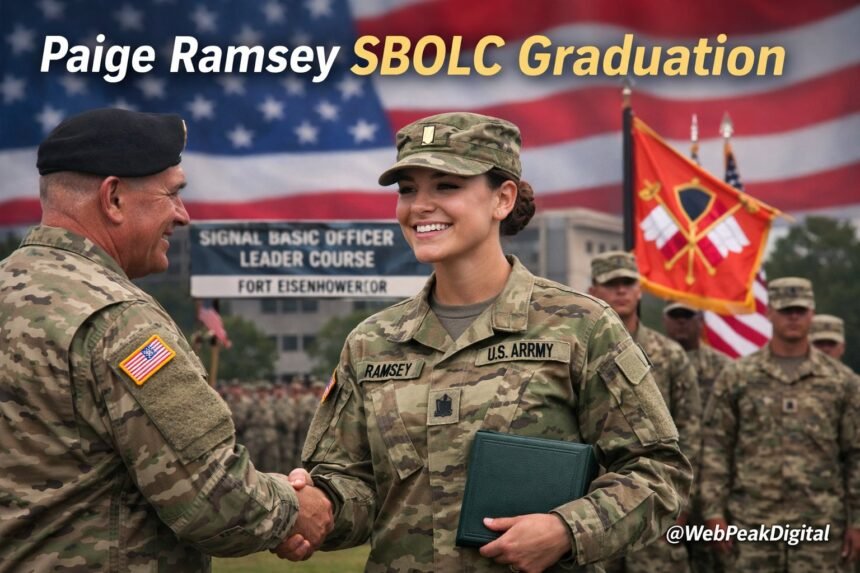
Paige Ramsey’s completion of a major Army training milestone reflects the structured path new officers follow after commissioning. As a Signal Corps officer in the Army National Guard, her training focuses on leadership, operational readiness, and the technical skills required to support modern military communications. Graduations like this are more than ceremonial, confirming that an officer has met federally defined standards to lead soldiers and manage mission-critical systems.
The paige ramsey sbolc graduation marks the point at which formal training transitions into real-world responsibility. By completing the Signal Basic Officer Leader Course, she became fully qualified to serve in Signal Corps roles within her unit, supporting both state and federal missions. This milestone is relevant not only to her career progression but also to unit readiness and the broader Army communications mission.
What Is the Paige Ramsey SBOLC Graduation About?
The Paige Ramsey SBOLC graduation refers to the successful completion of the U.S. Army Signal Basic Officer Leader Course by Second Lieutenant Paige Ramsey.
It confirms she met the Army’s training standards to serve as a Signal Corps officer.
- Marks formal qualification after commissioning
- Signals readiness for operational assignment
- Documented through official military and local news reporting
Who Paige Ramsey Is
Paige Ramsey is a Second Lieutenant in the New Mexico Army National Guard.
She serves as a commissioned officer with both civilian and military responsibilities.
- Member of the Army National Guard since 2021
- Commissioned as a Second Lieutenant in 2024
- Balances Guard service with a civilian technical career
What SBOLC Stands For
SBOLC stands for Signal Basic Officer Leader Course.
It is the Army’s required initial training for Signal Corps officers.
- Focuses on leadership and communications systems
- Required after commissioning
- Conducted by the U.S. Army Signal School
Why This Graduation Is Newsworthy
This graduation is newsworthy because it represents a key professional milestone for a National Guard officer.
Local and regional outlets often report these achievements due to community ties.
- Confirms completion of a federally recognized course
- Reflects officer readiness and resilience
- Highlights Guard and community representation
What Is the Army Signal Basic Officer Leader Course (SBOLC)?
The Army Signal Basic Officer Leader Course trains new Signal officers to lead and manage military communications operations.
It blends leadership instruction with technical Signal Corps training.
- Mandatory for Signal officers
- Combines classroom and field instruction
- Establishes baseline officer competence
Purpose of the Signal BOLC
The purpose of Signal BOLC is to prepare officers to lead communications units effectively.
It focuses on both command skills and technical understanding.
- Leadership decision-making
- Tactical communications planning
- Army operational doctrine
Officers Who Are Required to Attend
All newly commissioned Signal Corps officers must attend SBOLC.
This applies across Active Duty, Army Reserve, and National Guard.
- Second Lieutenants assigned to Signal branch
- Officers transferring into Signal roles
- Guard officers preparing for unit assignment
How SBOLC Fits Into Army Career Progression
SBOLC is the first required career-development course after commissioning.
Completion is necessary before assuming full officer duties.
- Precedes platoon-level leadership
- Required before promotion consideration
- Establishes branch qualification
How the SBOLC Training Process Works
The SBOLC training process combines structured instruction with evaluated leadership performance.
Officers progress through defined academic and field phases.
- Set training timeline
- Performance-based assessments
- Graduation tied to standards, not time alone
Course Length and Structure
SBOLC typically lasts around 16 weeks.
The course is divided into progressive learning phases.
- Initial orientation and fundamentals
- Core technical instruction
- Field and leadership application
Academic and Field Training Components
Training includes both classroom learning and hands-on field exercises.
Officers are tested in controlled and operational environments.
- Communications systems theory
- Tactical network setup
- Field problem-solving scenarios
Leadership and Tactical Evaluations
Officers are continuously evaluated on leadership and execution.
Performance affects graduation eligibility.
- Leadership roles during exercises
- Written and practical exams
- Peer and instructor assessments
Paige Ramsey’s Military Background and Path to SBOLC
Paige Ramsey followed the standard National Guard officer path to SBOLC.
Her progression reflects both service commitment and professional development.
- Enlisted service background
- Commissioning milestone
- Required post-commission training
National Guard Service Background
She joined the New Mexico National Guard in 2021.
Her service includes training, drills, and state-federal readiness roles.
- Initial enlistment and training
- Unit participation
- Dual civilian-military role
Commissioning as a Second Lieutenant
She was commissioned as a Second Lieutenant in 2024.
Commissioning granted her officer authority and responsibility.
- Completion of officer commissioning requirements
- Assignment to the Signal branch
- Eligibility for SBOLC
Challenges and Milestones Before Graduation
Her path included recovery from injury and completion of required training phases.
These milestones are common in officer development.
- Physical readiness recovery
- Officer training progression
- Successful course completion
SBOLC Graduation Ceremony Details
The SBOLC graduation ceremony formally recognizes course completion.
It serves as the official transition from trainee to qualified officer.
- Conducted by the Army Signal School
- Attendance by peers and leaders
- Formal recognition of achievement
Graduation Date and Location
Paige Ramsey graduated on April 30, 2025, at Fort Eisenhower, Georgia.
Fort Eisenhower is the home of Army Signal training.
- Centralized Signal Corps training site
- Federally recognized graduation location
- Standard venue for SBOLC
What Happens During an SBOLC Graduation
Graduation includes formal recognition and certification.
Officers are acknowledged for meeting course standards.
- Official remarks
- Certificate presentation
- Branch recognition
Recognition and Certification Outcomes
Graduates receive confirmation of Signal Corps qualification.
This certification is recorded in official military records.
- Branch qualification status
- Eligibility for operational roles
- Career progression documentation
Roles and Responsibilities After SBOLC Graduation
After graduation, officers are authorized to serve as Signal leaders.
They assume responsibility for personnel and communications systems.
- Unit-level leadership
- Technical oversight
- Operational planning
Signal Officer Duties
Signal officers manage and operate Army communications networks.
Their role ensures reliable command and control.
- Network planning and execution
- Equipment oversight
- Communications security
Leadership Expectations at the Unit Level
Graduates are expected to lead soldiers effectively.
Leadership accountability increases after SBOLC.
- Soldier welfare and discipline
- Training management
- Mission readiness
Operational and Technical Responsibilities
Officers bridge leadership and technology.
They translate mission needs into communication solutions.
- Tactical network deployment
- Coordination with commanders
- Troubleshooting system failures
Why SBOLC Graduation Matters in an Army Career
SBOLC graduation is required to function as a Signal Corps officer.
Without it, officers cannot fully perform branch duties.
- Career gate requirement
- Professional credibility
- Operational readiness
Qualification for Signal Corps Assignments
Graduation qualifies officers for Signal-specific roles.
Assignments depend on course completion.
- Platoon leadership roles
- Staff signal positions
- Unit-level communications leadership
Impact on Promotion and Career Readiness
Completion supports future promotions and evaluations.
It demonstrates readiness for increased responsibility.
- Officer evaluation reports
- Promotion board eligibility
- Career timeline progression
Importance for National Guard Units
Guard units rely on SBOLC-trained officers for readiness.
Training directly affects unit effectiveness.
- Federal mission capability
- State emergency response
- Technical leadership continuity
Benefits of SBOLC Graduation for Different Stakeholders
SBOLC graduation benefits officers, units, and the broader Army.
Each stakeholder gains measurable value.
- Skill validation
- Leadership capacity
- Operational reliability
Benefits for the Officer
The officer gains formal qualification and credibility.
This supports long-term career development.
- Recognized expertise
- Leadership confidence
- Career advancement readiness
Benefits for the National Guard
The Guard gains trained leadership capacity.
This strengthens unit performance.
- Improved communications leadership
- Mission-ready officers
- Reduced training gaps
Benefits for Military Communications Operations
Graduates improve operational communications reliability.
Signal readiness supports all Army missions.
- Network continuity
- Command effectiveness
- Mission success
Requirements to Graduate from SBOLC
Graduation requires meeting academic, physical, and leadership standards.
Failure in any area can delay completion.
- Objective performance criteria
- Continuous evaluation
- Standards-based outcomes
Academic Performance Standards
Officers must pass written and practical exams.
Academic failure can result in recycling.
- Communications theory exams
- Planning assessments
- Technical evaluations
Physical and Leadership Requirements
Officers must meet physical fitness and leadership benchmarks.
Leadership performance is closely monitored.
- Physical readiness standards
- Leadership during exercises
- Professional conduct
Evaluation and Assessment Criteria
Assessments are ongoing and cumulative.
Final graduation depends on overall performance.
- Instructor evaluations
- Peer leadership feedback
- Field exercise outcomes
Common Challenges and Risks During SBOLC
SBOLC presents academic, physical, and leadership challenges.
Not all officers complete the course on the first attempt.
- High workload
- Performance pressure
- Limited recovery time
Academic and Technical Complexity
The technical content is demanding for new officers.
Signal systems require precise understanding.
- Complex communications concepts
- Rapid learning pace
- Practical application pressure
Physical and Mental Demands
The course is physically and mentally taxing.
Stress management is essential.
- Long training days
- Field exercise fatigue
- Performance under stress
Reasons Some Officers Fail or Recycle
Officers may fail due to academic or leadership shortfalls.
Recycling extends training time.
- Exam failures
- Leadership deficiencies
- Fitness standard issues
Best Practices for Success in SBOLC
Success in SBOLC depends on preparation, discipline, and leadership.
Officers who plan ahead perform better.
- Structured study habits
- Physical readiness
- Professional mindset
Preparation Before Attending the Course
Pre-course preparation reduces early setbacks.
Officers benefit from advance readiness.
- Review basic Signal concepts
- Improve physical fitness
- Understand course expectations
Study and Time-Management Strategies
Effective time management is critical.
Balancing academics and field training is required.
- Daily study schedules
- Peer study groups
- Prioritization of weak areas
Leadership Behaviors That Matter Most
Professional leadership behavior is closely observed.
Small actions influence evaluations.
- Accountability
- Clear communication
- Team-focused decision-making
SBOLC Compared to Other Army BOLC Programs
SBOLC differs from other BOLC programs by its technical focus.
Each branch tailors training to mission needs.
- Branch-specific skills
- Different operational priorities
- Unique leadership challenges
SBOLC vs Infantry BOLC
SBOLC emphasizes communications, while Infantry BOLC emphasizes combat leadership.
The skill sets are distinct.
- Technical systems vs maneuver tactics
- Network planning vs combat operations
- Support-focused vs combat-focused roles
SBOLC vs Cyber BOLC
SBOLC focuses on tactical communications, not cyber operations.
Cyber BOLC addresses digital defense and offense.
- Field networks vs cyber environments
- Tactical support vs cyber mission forces
- Different technical depth
Key Differences Across Branches
Each BOLC aligns with branch mission requirements.
No single program is interchangeable.
- Mission-specific training
- Branch doctrine
- Operational focus
Frequently Asked Questions (FAQs)
What is the significance of Paige Ramsey SBOLC graduation?
The Paige Ramsey SBOLC graduation marks the completion of the Army’s Signal Basic Officer Leader Course, officially qualifying her to lead communications units and manage operational networks. It signifies readiness for both leadership and technical responsibilities in the Signal Corps.
How long does the SBOLC course last?
The Signal Basic Officer Leader Course typically lasts around 16 weeks, combining classroom instruction, field exercises, and leadership evaluations to prepare officers for operational duties.
What are the main components of SBOLC training?
SBOLC training includes academic lessons on communications systems, tactical field exercises, leadership development, and practical evaluations to ensure officers are mission-ready.
Who is required to attend SBOLC?
All newly commissioned Signal Corps officers, including Active Duty, Army Reserve, and National Guard members, are required to attend SBOLC to qualify for branch-specific leadership roles.
Where is SBOLC conducted?
The Signal Basic Officer Leader Course is conducted at Fort Eisenhower in Georgia, which houses the U.S. Army Signal School and provides both classroom and field training facilities.