

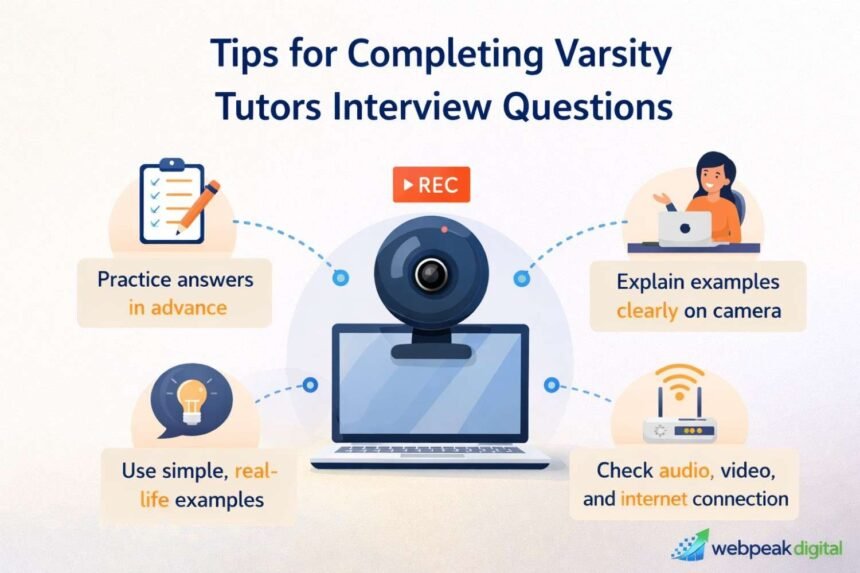
Many candidates search for how to complete a Varsity Tutor interview questions because the process is different from a standard job interview. There is no live conversation in most cases, and answers are recorded and reviewed later. This format often catches applicants off guard if they are not prepared.
The interview focuses on how well you explain concepts, structure your answers, and communicate on camera. Subject knowledge alone is not enough. Evaluators look for clear teaching logic, realistic examples, and professional delivery within strict time limits.
Understanding the interview steps, common question types, and evaluation criteria makes it easier to complete the process correctly. With the right preparation, candidates can avoid common mistakes and present themselves as reliable, effective tutors.
What Is the Varsity Tutors Interview Process?
The Varsity Tutors interview process is a structured online evaluation designed to confirm that a candidate can teach effectively, communicate clearly, and work reliably in a remote tutoring environment.
It is not a conversational interview. It is a performance-based screening focused on real tutoring ability.
Overview of the Varsity Tutors Hiring Model
The hiring model is centralized and remote, allowing Varsity Tutors to review candidates consistently at scale.
Approval is based on demonstrated skills rather than formal teaching titles.
Key characteristics include:
-
Online-only application and evaluation
-
Standardized questions for all candidates
-
Emphasis on teaching clarity and professionalism
-
Ongoing eligibility rather than one-time hiring
Tutors are approved into a talent pool, not assigned guaranteed students.
Types of Interviews Used by Varsity Tutors
Varsity Tutors uses a mix of recorded and assessment based interviews.
Most candidates never speak to a live interviewer.
The common formats are:
-
Asynchronous video interview questions
-
Subject knowledge assessments
-
Teaching or explanation demonstrations
-
Occasional live follow-ups for niche roles
This structure allows consistent evaluation across thousands of applicants.
How the Tutor Interview Differs From Traditional Interviews
The tutor interview is skills-driven, not conversation-driven.
Candidates are judged on what they show, not how confidently they speak.
Major differences include:
-
No back-and-forth discussion
-
Limited opportunity to clarify answers
-
Heavy focus on explanation quality
-
Recorded responses reviewed later
Preparation has more impact than personality.
How the Varsity Tutors Interview Works Step by Step
The interview follows a predictable sequence from application to approval.
Each step filters candidates based on readiness and teaching competence.
Application Submission and Initial Screening
The process starts with an online application that captures subject areas, availability, and background.
This step filters out candidates who do not meet baseline requirements.
Initial screening checks:
-
Subjects selected for tutoring
-
Academic or practical experience
-
Schedule flexibility
-
Basic platform eligibility
Only qualified applicants proceed further.
Asynchronous Video Interview Explained
The video interview requires candidates to record answers to preset questions.
Each response has a time limit and limited preparation time.
What candidates should expect:
-
No live interviewer present
-
Fixed number of questions
-
One attempt per response in most cases
-
Evaluation focused on clarity and structure
Strong answers are concise and example-driven.
Subject Assessments and Qualification Tests
Most tutoring roles require subject assessments to verify competence.
These tests ensure tutors can teach content accurately.
Assessment features include:
-
Subject-specific questions
-
Time-based completion
-
Accuracy thresholds
-
Different difficulty levels by subject
Failing an assessment may restrict subject eligibility.
Final Review and Approval Timeline
After all components are completed, the application enters manual review.
Approval is not instant and timelines vary.
Typical outcomes include:
-
Approval within several days or weeks
-
Email notification of status
-
Access to onboarding tools after approval
-
No individual feedback for rejections
Review speed depends on applicant volume.
What Roles Are Evaluated During the Varsity Tutors Interview
Varsity Tutors evaluates multiple tutor categories using the same core standards.
Role-specific expectations adjust the evaluation focus.
Academic Subject Tutors
Academic tutors are evaluated on foundational teaching skills.
The focus is on clarity and student comprehension.
Evaluators look for:
-
Accurate subject explanations
-
Simple breakdown of concepts
-
Engagement strategies
-
Age-appropriate communication
Formal teaching experience is helpful but not required.
Test Prep and Specialized Tutors
Test prep tutors face higher content and strategy expectations.
Accuracy and exam familiarity are essential.
Evaluation focuses on:
-
Knowledge of exam structure
-
Strategy-based instruction
-
Time management guidance
-
Experience with measurable results
These roles often require stronger assessments.
Online vs In-Person Tutor Expectations
Online tutors are evaluated on digital communication and reliability.
In-person tutors must also demonstrate logistical readiness.
Key differences include:
-
Camera presence for online roles
-
Travel and scheduling for in-person roles
-
Similar teaching standards across both
-
Mandatory tech competence for all tutors
Most roles prioritize online delivery.
Why the Varsity Tutors Interview Matters
The interview directly determines whether a candidate can access the platform.
It also influences how often and how quickly students are assigned.
How Interview Performance Affects Tutor Approval
Approval depends entirely on interview performance.
There is no trial period to compensate for weak interviews.
Performance affects:
-
Acceptance or rejection
-
Subjects approved for tutoring
-
Visibility in the matching system
-
Long-term access to opportunities
Incomplete responses reduce approval chances.
What Varsity Tutors Looks for in Successful Candidates
Successful candidates show they can teach clearly and reliably.
Confidence matters less than structured explanations.
Key qualities include:
-
Clear, logical explanations
-
Student-centered thinking
-
Professional tone
-
Honest availability
Overly rehearsed or vague answers perform poorly.
How Interview Results Impact Tutor Matching
Interview scores influence student matching quality.
Stronger demonstrations improve placement frequency.
Matching considers:
-
Subject strength
-
Teaching clarity
-
Availability accuracy
-
Communication quality
Better matches lead to higher retention.
Common Varsity Tutors Interview Questions You Should Expect
The interview questions are predictable and role-focused.
They assess motivation, teaching ability, and reliability.
Motivation and Background Questions
These questions assess intent and commitment.
They help determine long-term reliability.
Common themes include:
-
Reasons for tutoring
-
Relevant experience
-
Preferred subjects
-
Schedule expectations
Specific answers perform better than generic ones.
Teaching Style and Student Engagement Questions
These questions evaluate how candidates teach.
They focus on explanation and adaptation.
Expect prompts about:
-
Explaining difficult topics
-
Handling disengaged students
-
Adapting to learning styles
-
Tracking student progress
Practical teaching logic is essential.
Scenario-Based and Behavioral Questions
Scenario questions test decision-making.
They reflect real tutoring situations.
Typical scenarios involve:
-
Struggling students
-
Missed sessions
-
Knowledge gaps
-
Student frustration
Structured responses score higher.
Technical and Availability-Related Questions
These questions confirm readiness and reliability.
They often influence final decisions.
Topics include:
-
Internet stability
-
Device access
-
Weekly availability
-
Comfort with platforms
Inconsistent answers raise concerns.
How to Answer Varsity Tutors Interview Questions Effectively
Strong answers follow a clear pattern and stay focused.
Rambling responses weaken evaluator confidence.
Structuring Answers for Video Interviews
Effective answers are structured and direct.
This helps evaluators assess quickly.
A strong structure includes:
-
Brief context
-
Clear explanation
-
Example
-
Result or outcome
Avoid unnecessary background details.
Using Real Teaching Examples in Responses
Real examples demonstrate credibility.
They show how candidates apply skills.
Effective examples:
-
Are specific
-
Highlight problem-solving
-
Show student improvement
-
Reflect adaptability
Generic stories reduce impact.
Communicating Clearly on Camera
Clear delivery is a core evaluation factor.
Poor communication undermines strong content.
Best practices include:
-
Steady speaking pace
-
Direct camera focus
-
Simple language
-
Minimal filler words
Practice improves confidence.
Best Practices for Preparing Before the Interview
Preparation directly affects interview quality.
Most rejections stem from lack of preparation.
Researching Varsity Tutors and Its Platform
Understanding the platform improves relevance.
It shows alignment with expectations.
Preparation should include:
-
Tutoring formats
-
Student demographics
-
Scheduling model
-
Platform basics
Surface-level research is noticeable.
Practicing Recorded Interview Responses
Practice improves timing and clarity.
Silent preparation is insufficient.
Effective practice includes:
-
Recording mock responses
-
Reviewing delivery
-
Timing answers
-
Refining explanations
Practice reduces hesitation.
Setting Up Your Interview Environment
Your environment affects evaluation quality.
Distractions weaken perception.
Key setup steps:
-
Quiet room
-
Neutral background
-
Good lighting
-
Stable camera
Environment reflects professionalism.
Technical and Platform Requirements to Complete the Interview
Technical readiness is mandatory.
Most technical failures are avoidable.
Device, Camera, and Audio Requirements
Basic hardware standards apply.
Audio quality is especially important.
Minimum requirements include:
-
Working webcam
-
Clear microphone
-
Updated device
-
Stable setup
Poor audio can cause rejection.
Internet and Browser Compatibility
Reliable internet is required.
Browser issues often cause submission failures.
Best practices:
-
Wired internet if possible
-
Supported browsers
-
Closed background apps
-
Avoid public Wi-Fi
Test before starting.
Common Technical Issues and How to Avoid Them
Most issues result from poor preparation.
Testing prevents delays.
Common problems include:
-
Blocked camera permissions
-
Incorrect audio input
-
Upload failures
-
Session timeouts
Pre-checks reduce risk.
Common Mistakes Candidates Make During the Interview
Most mistakes are preventable.
They usually relate to preparation and clarity.
Incomplete or Rushed Video Responses
Rushed answers signal poor preparation.
Incomplete responses weaken evaluation.
Common causes include:
-
Misjudging time limits
-
Skipping examples
-
Abrupt endings
Controlled pacing improves quality.
Generic or Unprepared Answers
Generic answers fail to stand out.
They suggest low commitment.
Weak responses often:
-
Use vague language
-
Avoid examples
-
Repeat platform slogans
Specificity is critical.
Ignoring Teaching Demonstration Expectations
Teaching demonstrations are central to evaluation.
They are not optional in practice.
Common mistakes include:
-
Teaching at the wrong level
-
Poor structure
-
Ignoring student perspective
Demonstrations should feel practical.
Tools and Techniques to Improve Interview Performance
Simple tools can significantly improve performance.
They help identify weaknesses early.
Mock Interview and Recording Tools
Recording tools reveal delivery issues.
They improve clarity and pacing.
Useful tools include:
-
Camera preview apps
-
Voice recorders
-
Basic video editors
Review recordings objectively.
Lesson Planning Frameworks for Tutors
Frameworks help structure explanations.
They keep answers focused.
Effective frameworks include:
-
Objective → Explanation → Example → Check
-
Concept → Application → Review
-
Problem → Strategy → Practice
Consistency builds confidence.
Time Management Techniques for Recorded Responses
Time limits require discipline.
Overlong answers reduce clarity.
Helpful techniques:
-
Mental outlining
-
Section-based timing
-
Timer practice
Control improves delivery.
Actionable Checklist Before Submitting Your Interview
Final checks prevent avoidable mistakes.
Submission errors are difficult to correct.
Content and Answer Readiness Checklist
Answers should be complete and relevant.
Final review ensures quality.
Confirm that:
-
Every question is answered
-
Examples are included
-
Explanations are clear
-
Time limits are respected
Incomplete answers reduce approval chances.
Technical and Environment Checklist
Technical readiness prevents disruptions.
This step should not be skipped.
Verify:
-
Camera and mic work
-
Internet stability
-
Browser permissions
-
Quiet environment
Technical failures delay review.
Final Review Before Submission
Final review ensures professionalism.
Small details matter.
Check for:
-
Clear audio
-
Consistent pacing
-
No distractions
-
Accurate availability
Once submitted, changes are limited.
Varsity Tutors Interview vs Other Online Tutoring Interviews
The Varsity Tutors interview is more structured than most.
It emphasizes teaching ability over credentials.
Comparison With Other Tutoring Platforms
Many platforms use informal screening.
Varsity Tutors uses standardized evaluation.
Key differences include:
-
Recorded interviews
-
Skill demonstrations
-
Objective scoring
Structure improves consistency.
Key Differences in Interview Format and Evaluation
Evaluation focuses on performance, not résumé strength.
This benefits capable teachers without formal titles.
Distinct features include:
-
Replayable responses
-
Teaching demonstrations
-
Subject assessments
Delivery matters more than background.
Which Interview Process Is More Flexible
Varsity Tutors offers scheduling flexibility.
Preparation standards remain high.
Flexibility includes:
-
Self-paced completion
-
Remote access
-
Multi-subject eligibility
Flexibility does not lower expectations.
Frequently Asked Questions ( FAQs )
How to complete a Varsity Tutor interview questions correctly?
You complete the interview by recording clear, structured answers to preset questions within the given time limits.
Focus on explaining concepts step by step, use real teaching examples, and make sure your audio, video, and internet connection are stable before submitting.
Is the Varsity Tutors interview live or recorded?
Most Varsity Tutors interviews are recorded and asynchronous.
You answer questions on your own time, and reviewers evaluate your responses later rather than interviewing you live.
What type of questions are asked in the Varsity Tutors interview?
The interview includes motivation, teaching style, scenario-based, and technical availability questions.
Some roles also require subject assessments or short teaching demonstrations.
Can I retake or edit my interview answers?
In most cases, retakes are not allowed once an answer is submitted.
This is why practicing responses and checking your setup before starting is important.
What happens after passing the Varsity Tutors interview?
After passing, you gain access to the tutoring platform and onboarding tools.
Approval does not guarantee immediate students, but it allows you to be matched based on subject demand and availability.