

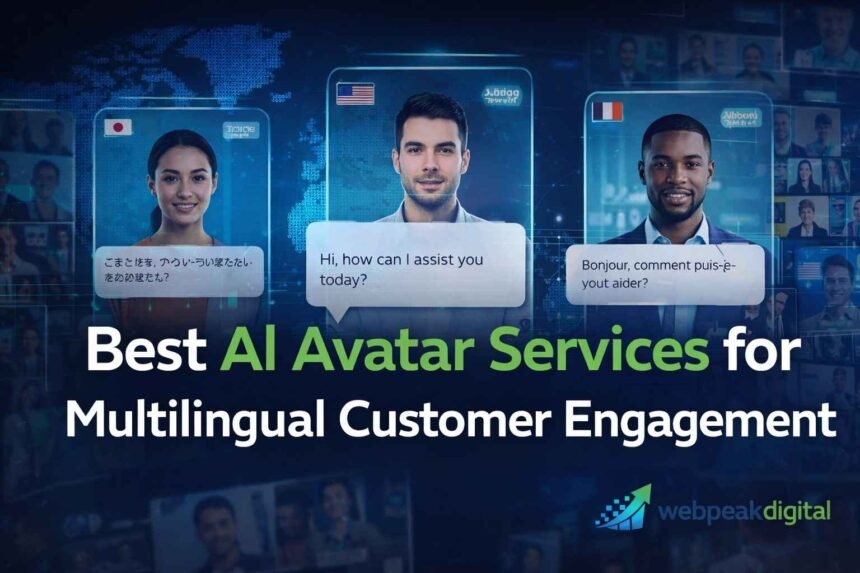
Businesses serving global audiences increasingly rely on digital interfaces to communicate clearly across languages. As customer expectations rise, companies are looking beyond basic translation tools toward more interactive solutions that can explain, guide, and respond in real time. This is where best AI avatar services for multilingual customer engagement are gaining attention, particularly among organizations that need consistent messaging across regions without expanding human support teams at the same pace.
These systems are not about novelty or visuals alone. They are designed to reduce friction in customer interactions, support operational scale, and maintain clarity across languages and channels. When implemented correctly, they sit between self-service tools and human agents, handling routine interactions while preserving accuracy, tone, and compliance in complex, multilingual environments.
What Are AI Avatar Services for Multilingual Customer Engagement?
AI avatar services are systems that use artificial intelligence to deliver spoken, written, and visual interactions through digital human-like characters across multiple languages. They are used to support, inform, and guide customers consistently at scale.
These services combine language models, speech systems, and visual rendering to create interactive customer-facing experiences that work across regions and languages without relying solely on human staff.
Definition of AI Avatars in Customer Communication
AI avatars are digital representatives that communicate with customers using text, voice, and visual presence.
They are designed to:
-
Answer questions
-
Guide users through processes
-
Deliver consistent information across channels
-
Adapt responses based on language and context
Unlike static content, AI avatars respond dynamically based on user input and predefined business rules.
Difference Between AI Avatars, Chatbots, and Virtual Assistants
AI avatars differ from chatbots and virtual assistants in form and interaction depth.
Key distinctions include:
-
AI avatars: Visual + voice + text, designed for engagement and guided interaction
-
Chatbots: Text-based, task-focused, limited conversational depth
-
Virtual assistants: Voice-first, often device-bound, focused on commands
Avatars are typically used when presence, clarity, and trust matter more than speed alone.
What “Multilingual Engagement” Means in a Business Context
Multilingual engagement means serving customers in their preferred language with accuracy, cultural awareness, and consistency.
In practice, this includes:
-
Language detection and switching
-
Region-specific phrasing and tone
-
Support for local regulations and norms
The goal is functional understanding first, not just literal translation.
How Multilingual AI Avatar Services Work
Multilingual AI avatar services operate through coordinated language, speech, and visual systems that process input and deliver responses in real time.
Each interaction follows a structured pipeline to ensure accuracy, speed, and consistency across languages.
Language Processing and Real-Time Translation Workflow
The language workflow converts user input into an actionable response in the correct language.
Typical steps include:
-
Detecting the input language
-
Interpreting intent using language models
-
Translating or generating responses natively
-
Applying business rules and compliance filters
High-quality systems avoid word-for-word translation and use intent-based generation instead.
Speech, Text, and Visual Interaction Pipelines
AI avatars rely on multiple synchronized pipelines.
These usually include:
-
Speech-to-text for voice input
-
Text generation for response logic
-
Text-to-speech for spoken output
-
Visual animation synced to speech
Latency control is critical to keep interactions feeling natural.
Integration With Customer Touchpoints (Web, Apps, Kiosks)
AI avatars are deployed where customers already interact with the business.
Common environments include:
-
Websites and customer portals
-
Mobile applications
-
In-store kiosks and terminals
-
Internal support dashboards
Integration often uses APIs and SDKs to connect with CRM and ticketing systems.
Key Stakeholders and Decision-Makers Involved
AI avatar adoption involves multiple internal teams because it affects communication, operations, and compliance.
Clear ownership and shared governance are required to avoid fragmented deployment.
Marketing and Customer Experience Teams
Marketing and CX teams define how the avatar communicates with customers.
Their responsibilities typically include:
-
Tone, language style, and brand alignment
-
Customer journey mapping
-
Use case prioritization
-
Performance feedback based on engagement metrics
They focus on trust, clarity, and consistency.
Customer Support and Operations Leaders
Support and operations teams manage how avatars interact with real service workflows.
They are responsible for:
-
Escalation rules to human agents
-
Knowledge base accuracy
-
Service-level alignment
-
Monitoring resolution quality
Their priority is operational reliability, not novelty.
IT, Security, and Compliance Teams
IT and compliance teams ensure the system meets technical and regulatory requirements.
Their scope includes:
-
Data handling and storage controls
-
System uptime and access management
-
Vendor risk assessment
-
Audit and logging requirements
Early involvement prevents deployment delays later.
Why Multilingual AI Avatars Matter for Global Customer Engagement
Multilingual AI avatars matter because customers expect to be understood without friction, regardless of location or language.
Language quality directly affects trust, satisfaction, and resolution outcomes.
Language Barriers and Customer Experience Gaps
Language gaps cause misunderstandings, longer resolution times, and customer drop-off.
Common issues include:
-
Incomplete answers due to translation errors
-
Misinterpreted intent
-
Inconsistent information across languages
AI avatars help standardize responses while adapting language output.
Global Expansion and Localization Challenges
Scaling human support across regions is expensive and slow.
AI avatars address this by:
-
Supporting new languages without full team expansion
-
Delivering consistent policy and product information
-
Reducing dependency on regional staffing levels
Localization still requires oversight, but scaling becomes manageable.
Expectations for 24/7, Human-Like Support
Customers expect support at all hours and across channels.
AI avatars meet this expectation by:
-
Operating continuously
-
Handling routine inquiries instantly
-
Maintaining a conversational tone
They are not replacements for humans, but they reduce wait times and overload.
Business Benefits of AI Avatar Services
AI avatar services deliver measurable operational and customer experience benefits when deployed correctly.
The value varies by function, but the impact is usually cross-functional.
Benefits for Customer Support and Service Efficiency
AI avatars improve support efficiency by handling predictable interactions.
Key benefits include:
-
Faster response times
-
Reduced ticket volume
-
Consistent answers across languages
-
Clear escalation paths to humans
This allows support teams to focus on complex cases.
Benefits for Marketing and Brand Consistency
Avatars help maintain consistent messaging across markets.
They support:
-
Uniform product explanations
-
Controlled tone and terminology
-
Rapid updates across all languages
This reduces the risk of conflicting regional messaging.
Benefits for Enterprise Scalability and Cost Control
From an operational view, avatars lower marginal service costs.
They enable:
-
Scaling without proportional staffing increases
-
Predictable support capacity
-
Lower training and onboarding overhead
Cost control improves as usage grows.
Best Practices for Using AI Avatars Across Languages
Effective multilingual avatars require governance, testing, and continuous refinement.
Language quality and escalation logic matter more than visual realism.
Localization vs Direct Translation
Localization delivers better outcomes than direct translation.
Best practice includes:
-
Adapting phrasing to regional norms
-
Avoiding idioms that do not translate well
-
Reviewing content with native speakers
Literal translation often leads to confusion.
Maintaining Brand Voice Across Multiple Languages
Brand voice should be defined centrally and adapted locally.
This involves:
-
Style guides per language
-
Approved terminology lists
-
Regular reviews of generated responses
Consistency builds trust over time.
Continuous Training and Performance Optimization
AI avatars require ongoing monitoring and tuning.
Effective programs include:
-
Regular intent review
-
Feedback loops from support teams
-
Language accuracy audits
-
Performance tracking by region
Static deployments degrade quickly.
Compliance, Privacy, and Ethical Considerations
Multilingual AI avatars operate in regulated environments and must follow strict standards.
Compliance failures often stem from oversight, not technology.
Data Privacy and Customer Consent Requirements
Customer data must be handled according to applicable laws.
This usually requires:
-
Clear consent mechanisms
-
Data minimization
-
Secure storage and transmission
-
Defined retention periods
Avatars should not collect unnecessary personal data.
AI Transparency and Disclosure Standards
Users should know when they are interacting with an AI system.
Good practice includes:
-
Clear disclosure at the start of interactions
-
Honest descriptions of capabilities and limits
-
Easy access to human support
Transparency reduces complaints and regulatory risk.
Regional Regulations Affecting AI-Driven Engagement
Regulations vary by region and industry.
Common frameworks include:
-
GDPR and regional privacy laws
-
Consumer protection rules
-
Industry-specific compliance standards
Vendors should support region-based configuration.
Common Mistakes and Risks to Avoid
Most failures come from poor planning or unrealistic expectations.
Avoiding common mistakes improves both adoption and outcomes.
Over-Automation Without Human Escalation
AI avatars should not operate in isolation.
Risks include:
-
Customer frustration
-
Unresolved complex issues
-
Reputational damage
Clear escalation paths are mandatory.
Poor Language Accuracy and Cultural Misalignment
Low-quality language output undermines trust.
Warning signs include:
-
Incorrect terminology
-
Tone mismatches
-
Cultural insensitivity
Regular review by native speakers is essential.
Ignoring Accessibility and Inclusivity Needs
Accessibility is often overlooked.
Consider:
-
Clear speech pacing
-
Subtitle support
-
Screen-reader compatibility
-
Inclusive language choices
Accessibility improves overall usability.
Core Features to Evaluate in AI Avatar Platforms
Platform capabilities vary widely, even when claims appear similar.
Evaluation should focus on operational fit, not demos.
Language Coverage and Dialect Support
Language count alone is not enough.
Assess:
-
Dialect handling
-
Formal vs informal variants
-
Accuracy consistency across languages
Quality matters more than quantity.
Avatar Realism, Customization, and Branding
Visual presentation should match the use case.
Key factors include:
-
Custom appearance options
-
Lip-sync accuracy
-
Brand alignment controls
Overly realistic avatars can backfire if language quality is weak.
Analytics, Reporting, and Performance Tracking
Measurement is critical for improvement.
Look for:
-
Interaction success rates
-
Escalation frequency
-
Language-specific performance
-
Error and fallback reporting
Without data, optimization is guesswork.
Leading AI Avatar Services for Multilingual Customer Engagement
AI avatar platforms differ by focus, maturity, and deployment model.
Selection depends on business goals and technical requirements.
Enterprise-Focused AI Avatar Platforms
Enterprise platforms prioritize governance and integration.
They typically offer:
-
Strong security controls
-
API-based deployment
-
Compliance documentation
-
Long-term vendor support
These are suited for regulated environments.
Marketing and Video-First AI Avatar Solutions
Video-first platforms focus on content delivery.
Common strengths include:
-
Pre-recorded multilingual videos
-
Marketing and training use cases
-
Rapid content updates
They are less suited for real-time interaction.
Interactive and Real-Time Conversational Avatars
Conversational platforms support live interaction.
They emphasize:
-
Real-time language switching
-
Intent recognition
-
Escalation handling
These are used in support and service environments.
Comparison of AI Avatars vs Other Multilingual Engagement Solutions
AI avatars are one option among several multilingual tools.
Each approach has trade-offs.
AI Avatars vs Human-Only Support Models
Human-only models offer nuance but lack scalability.
Key differences:
-
Humans handle complexity well
-
AI avatars scale instantly
-
Costs rise faster with human-only models
Many organizations move to hybrid approaches.
AI Avatars vs Traditional Chatbots
Chatbots are simpler and cheaper but limited.
Compared to avatars:
-
Chatbots lack visual presence
-
Avatars support guided experiences
-
Avatars handle complex explanations better
Use cases often overlap but are not identical.
Hybrid Models Combining AI and Human Agents
Hybrid models balance efficiency and quality.
They typically involve:
-
AI handling first contact
-
Humans resolving edge cases
-
Shared knowledge systems
This model is common in mature operations.
Evaluation Checklist for Choosing the Right AI Avatar Service
A structured evaluation prevents costly mistakes.
Checklists help align stakeholders.
Technical and Integration Requirements
Confirm technical compatibility early.
Review:
-
API availability
-
CRM and ticketing integration
-
Deployment environments
-
Security certifications
Integration gaps cause delays later.
Language, Region, and Audience Fit
Assess real-world language needs.
Consider:
-
Primary customer regions
-
Regulatory language requirements
-
Cultural expectations
Avoid selecting platforms based on language count alone.
Cost, Scalability, and Vendor Support
Total cost extends beyond licensing.
Evaluate:
-
Usage-based pricing
-
Support and onboarding costs
-
Scalability limits
-
Vendor roadmap stability
Long-term fit matters more than short-term savings.
Frequently Asked Questions
Are AI avatar services suitable for regulated industries?
Yes, AI avatar services can be used in regulated industries when they are designed with proper controls. This includes clear user disclosures, secure data handling, audit logs, and defined escalation paths to human agents. The technology itself is not the barrier; governance, configuration, and oversight determine whether it is compliant.
How accurate are AI avatars when supporting multiple languages?
Accuracy depends on the underlying language models, training data, and ongoing monitoring. For common customer inquiries, well-configured systems achieve high reliability, while complex or sensitive requests still benefit from human review. Accuracy improves over time when feedback loops and language audits are in place.
Can AI avatars fully replace human customer support teams?
No, AI avatars are not a full replacement for human support teams. They are most effective at handling routine questions, guiding users through standard processes, and reducing response times. Human agents remain essential for judgment-based decisions, emotional situations, and exceptions.
What types of organizations benefit most from the best AI avatar services for multilingual customer engagement?
Organizations with high interaction volumes, international audiences, and consistent information needs benefit the most. This includes companies in financial services, travel, retail, healthcare administration, and public-facing services where language access and response speed directly affect customer satisfaction.