

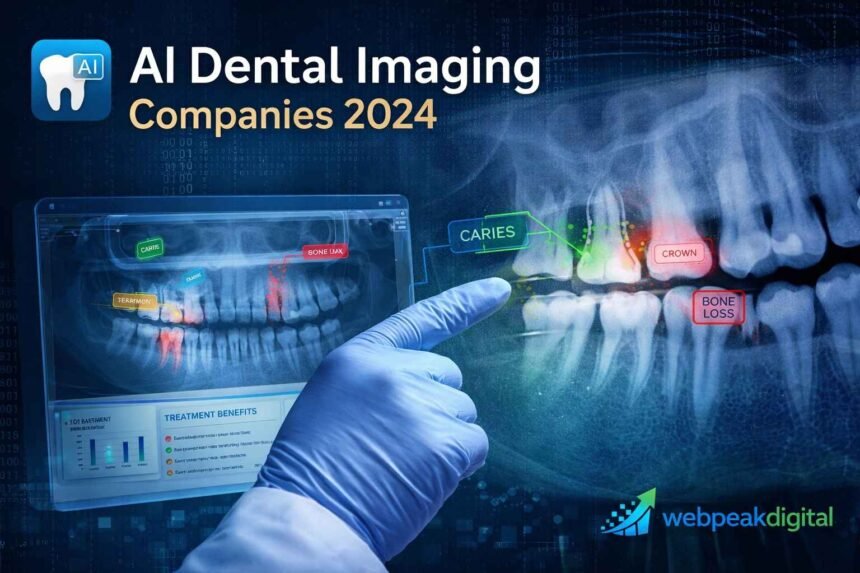
AI dental imaging companies 2024 are changing how dental images are reviewed, documented, and explained in everyday clinical practice. These companies develop AI-driven software that analyzes X-rays and scans to highlight potential findings, support diagnostic consistency, and improve how information is shared across care teams. The focus is not on replacing clinicians, but on reducing variability, catching issues earlier, and bringing more structure to image interpretation.
As adoption increases, dentists, practice owners, and healthcare organizations are taking a closer look at how these systems work, what problems they actually solve, and where their limits are. Understanding the technology, regulatory landscape, and real-world use cases is now essential for anyone evaluating AI-supported imaging as part of a modern dental workflow.
What Are AI Dental Imaging Companies?
AI dental imaging companies are organizations that develop software systems using artificial intelligence to analyze dental images and assist clinicians with diagnosis and decision-making.
They do not replace imaging hardware but enhance how images are interpreted.
-
Focus on radiographs, CBCT scans, and intraoral images
-
Designed to support clinical judgment, not automate treatment
-
Used in general dentistry, specialty practices, and DSOs
Definition of AI-Powered Dental Imaging
AI-powered dental imaging refers to software that uses machine learning to detect patterns and abnormalities in dental images.
The system highlights findings and provides consistent visual markers.
-
Trained on large datasets of annotated dental images
-
Identifies caries, bone loss, periapical lesions, and restorations
-
Outputs visual overlays rather than final diagnoses
Types of Dental Imaging Enhanced by AI
AI tools are applied across multiple dental imaging formats.
Each modality benefits from different types of analysis.
-
Bitewing and periapical X-rays for decay and bone loss
-
Panoramic images for broader structural assessment
-
CBCT scans for 3D evaluation and implant planning
How AI Imaging Differs From Traditional Dental Imaging
AI imaging adds analytical support that traditional imaging lacks.
The image itself is unchanged, but interpretation becomes augmented.
-
Automated detection of findings that may be overlooked
-
Standardized visual markers across providers
-
Reduced variability between clinicians
How AI Dental Imaging Technology Works
AI dental imaging works by processing images through trained algorithms that identify clinically relevant features.
The workflow runs alongside existing imaging systems.
-
Image capture remains unchanged
-
Analysis happens in seconds
-
Results appear as visual overlays or reports
Image Acquisition and Data Inputs
AI systems rely on standard dental images captured during routine care.
No specialized imaging process is required.
-
Digital X-rays and CBCT files are uploaded or synced
-
Image quality directly affects output reliability
-
Data is processed locally or via secure cloud systems
Machine Learning and Computer Vision Models
The core technology uses pattern recognition trained on labeled datasets.
Models improve through validation and controlled updates.
-
Supervised learning based on expert annotations
-
Continuous performance monitoring
-
Separate models for different conditions
Diagnostic Output and Clinical Decision Support
AI outputs are decision-support tools, not diagnoses.
They guide attention to areas that may require review.
-
Visual highlights on images
-
Structured findings lists
-
Documentation support for charts and claims
Key Roles AI Dental Imaging Plays in Modern Dentistry
AI dental imaging serves as a support layer across clinical, operational, and communication workflows.
Its role is assistive, not autonomous.
-
Improves consistency
-
Supports documentation
-
Enhances patient understanding
Support for Dentists and Hygienists
AI tools act as a second set of eyes during image review.
They reduce missed findings and cognitive load.
-
Helps identify early-stage issues
-
Supports hygiene recall and periodontal assessment
-
Assists less experienced clinicians
Use in Diagnosis and Treatment Planning
AI contributes structured insights that inform planning decisions.
Final judgment remains with the clinician.
-
Highlights relevant findings
-
Supports treatment justification
-
Improves record completeness
Impact on Patient Communication and Education
AI visuals help patients understand clinical findings.
Clear images improve shared decision-making.
-
Color-coded overlays
-
Side-by-side comparisons
-
Easier explanation of complex issues
Why AI Dental Imaging Matters in 2024
AI dental imaging matters because expectations for accuracy, efficiency, and documentation have increased.
Practices are under pressure to do more with fewer resources.
-
Higher patient volume
-
Staffing constraints
-
Increased scrutiny
Rising Diagnostic Accuracy Expectations
Patients, insurers, and regulators expect consistent diagnostics.
AI helps reduce variability.
-
Standardized detection criteria
-
Reduced subjectivity
-
Better audit readiness
Workforce and Efficiency Challenges in Dental Practices
Staff shortages have increased reliance on efficiency tools.
AI reduces repetitive review tasks.
-
Faster image interpretation
-
Support for hygiene-driven findings
-
Reduced burnout risk
Industry Shift Toward Data-Driven Dentistry
Dentistry is moving toward measurable, documented care.
AI supports this transition.
-
Structured findings
-
Data-backed treatment rationale
-
Better reporting and analytics
Benefits of AI Dental Imaging for Dental Practices
AI dental imaging provides operational and clinical advantages.
Benefits scale with practice size and complexity.
-
Improves consistency
-
Supports documentation
-
Enhances efficiency
Improved Detection of Dental Pathologies
AI improves early detection rates.
This supports preventive and restorative care.
-
Early caries identification
-
Bone loss visualization
-
Periapical issue detection
Workflow Efficiency and Time Savings
AI reduces time spent reviewing images manually.
This allows staff to focus on patient care.
-
Faster hygiene exams
-
Streamlined dentist review
-
Reduced rework
Revenue, Case Acceptance, and Practice Growth
Clear visuals improve patient understanding.
This often leads to higher acceptance rates.
-
Better treatment justification
-
Fewer disputed claims
-
More predictable outcomes
Benefits of AI Dental Imaging for Patients
Patients benefit from clearer explanations and earlier detection.
AI supports transparency in care.
-
Easier understanding
-
More informed decisions
-
Improved trust
Earlier Detection and Preventive Care
AI highlights subtle issues before they worsen.
This supports conservative treatment.
-
Smaller restorations
-
Reduced complications
-
Better long-term outcomes
Clearer Visual Explanations of Conditions
Visual overlays make conditions easier to grasp.
Patients see what clinicians see.
-
Color-coded indicators
-
Before-and-after comparisons
-
Reduced confusion
Trust, Transparency, and Treatment Confidence
Clear evidence builds confidence.
Patients are more likely to accept recommendations.
-
Visual proof
-
Consistent explanations
-
Reduced uncertainty
Types of AI Dental Imaging Companies in the Market
AI dental imaging companies vary by focus and maturity.
Understanding the differences helps with evaluation.
-
Software-first vendors
-
Hardware-integrated providers
-
Early-stage innovators
AI-First Dental Imaging Software Providers
These companies focus solely on AI analysis.
They integrate with multiple imaging systems.
-
Platform-agnostic design
-
Rapid innovation cycles
-
Software-centric updates
Traditional Imaging Companies Integrating AI
Established imaging vendors add AI to existing platforms.
This offers tighter hardware integration.
-
Seamless workflow
-
Bundled solutions
-
Slower iteration cycles
Emerging Startups vs. Established Vendors
Each option carries trade-offs.
Selection depends on risk tolerance and scale.
-
Startups offer agility
-
Established vendors offer stability
-
Validation maturity varies
Best Practices for Evaluating AI Dental Imaging Companies
Evaluation should focus on evidence, integration, and usability.
Claims should be verified.
-
Clinical validation matters
-
Workflow fit is critical
-
Training impacts adoption
Accuracy, Validation, and Clinical Evidence
Accuracy claims must be supported by data.
Independent validation is key.
-
Peer-reviewed studies
-
FDA documentation
-
Real-world performance metrics
Integration With Existing Imaging Systems
AI must fit current workflows.
Poor integration creates friction.
-
Compatibility with imaging software
-
EHR and PMS connections
-
Minimal workflow disruption
Ease of Use and Training Requirements
Usability drives adoption.
Complex systems fail in practice.
-
Intuitive interfaces
-
Minimal training time
-
Clear visual outputs
Regulatory, Compliance, and Ethical Considerations
AI dental imaging operates in a regulated environment.
Compliance is non-negotiable.
-
Medical device regulations apply
-
Data protection is mandatory
-
Ethical use requires oversight
FDA Clearance and Regulatory Status
Most AI dental imaging tools are regulated medical devices.
Clearance status matters.
-
Specific indications for use
-
Defined limitations
-
Ongoing compliance obligations
Data Privacy and Patient Security
Patient data must be protected.
AI systems increase data handling complexity.
-
HIPAA compliance
-
Secure data transmission
-
Clear data ownership policies
Clinical Responsibility and AI Limitations
AI does not assume liability.
Clinicians remain responsible.
-
AI is advisory only
-
Findings require verification
-
Clinical judgment is final
Common Mistakes and Risks When Adopting AI Dental Imaging
Adoption failures often stem from unrealistic expectations.
Risk management is essential.
-
Over-trust in outputs
-
Poor vendor vetting
-
Weak training
Over-Reliance on AI Without Clinical Judgment
AI can miss context.
Blind reliance increases risk.
-
False positives
-
False negatives
-
Misinterpretation
Ignoring Validation and Regulatory Claims
Not all tools are equally validated.
Marketing claims can be misleading.
-
Lack of FDA clearance
-
Limited training data
-
Unproven accuracy
Poor Change Management and Staff Adoption
Staff resistance undermines value.
Training and communication matter.
-
Inadequate onboarding
-
Workflow confusion
-
Low utilization rates
Tools, Platforms, and Features to Look For
Effective AI tools share common features.
These features support clinical and operational needs.
-
Clear visuals
-
Flexible deployment
-
Strong reporting
Real-Time Image Analysis and Visualization
Immediate feedback improves workflow.
Delays reduce usefulness.
-
Instant overlays
-
Clear color coding
-
Easy toggling on images
Cloud-Based vs. On-Premise Solutions
Deployment models affect security and scalability.
Choice depends on practice policy.
-
Cloud offers scalability
-
On-premise offers control
-
Hybrid models exist
Reporting, Analytics, and Audit Trails
Documentation supports compliance and performance tracking.
Auditability is increasingly important.
-
Structured reports
-
Usage tracking
-
Change logs
Checklist for Choosing an AI Dental Imaging Company
Selection should follow a structured process.
This reduces risk and improves outcomes.
-
Clinical fit
-
Technical compatibility
-
Financial viability
Clinical, Technical, and Operational Criteria
Evaluate across multiple dimensions.
No single factor is sufficient.
-
Accuracy metrics
-
Workflow integration
-
Support responsiveness
Vendor Support, Updates, and Roadmap
Long-term viability matters.
AI systems require ongoing updates.
-
Update frequency
-
Regulatory maintenance
-
Product roadmap clarity
Cost Structure and Return on Investment
Costs extend beyond licensing.
Total value should be assessed.
-
Subscription fees
-
Training time
-
Efficiency gains
AI Dental Imaging Companies vs Traditional Imaging Solutions
AI-enhanced imaging differs in scope and impact.
Comparison helps set expectations.
-
Analytical support vs static images
-
Workflow integration
-
Long-term value
Accuracy and Diagnostic Consistency
AI improves consistency across providers.
Traditional imaging relies solely on human interpretation.
-
Standardized detection
-
Reduced variability
-
Repeatable outputs
Workflow and Efficiency Comparison
AI streamlines review processes.
Traditional imaging is more manual.
-
Faster image review
-
Less rework
-
Better documentation
Long-Term Practice Impact
AI supports scalable, data-driven care.
Traditional systems offer limited growth leverage.
-
Better compliance readiness
-
Improved patient trust
-
Stronger operational metrics
Frequently Asked Questions
What are AI dental imaging companies in 2024?
AI dental imaging companies in 2024 are software providers that use artificial intelligence to analyze dental X-rays and scans.
They help clinicians identify potential findings, improve consistency, and support documentation, while final decisions remain with the dentist.
Are AI dental imaging tools approved for clinical use?
Yes, many AI dental imaging tools are approved for clinical use.
Approval depends on regulatory clearance, most commonly from the FDA, for specific imaging functions and indications.
Can AI dental imaging replace a dentist’s diagnosis?
No, AI dental imaging cannot replace a dentist’s diagnosis.
These tools provide decision support by highlighting areas of interest, but clinical judgment and responsibility stay with the provider.
How accurate is AI dental imaging compared to manual review?
AI dental imaging can improve consistency and early detection, especially for subtle findings.
Accuracy depends on image quality, validation data, and how the tool is used alongside clinical expertise.
How much do AI dental imaging solutions typically cost?
Costs vary by vendor, practice size, and features.
Most solutions use subscription pricing, often charged per provider, per location, or per month.