

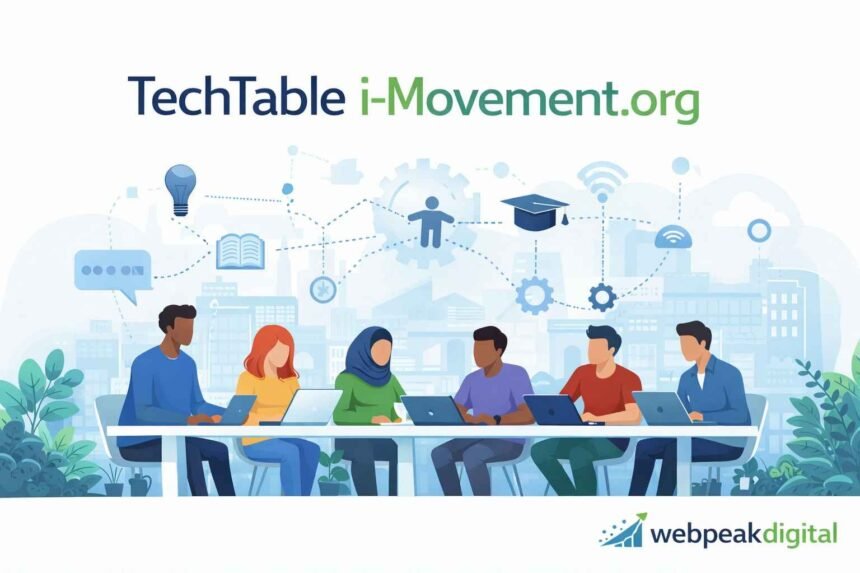
TechTable i-Movement.org is commonly referenced as a community-driven technology initiative focused on access, learning, and responsible use of digital tools. Rather than operating like a traditional organization or software platform, it appears in discussions as a shared space for people interested in technology’s social impact, ethical use, and inclusive growth. The emphasis is less on ownership or authority and more on participation, knowledge exchange, and practical understanding.
For readers encountering this topic, the challenge is often separating clearly defined facts from interpretation. Much of what exists around the platform comes from secondary explanations, community commentary, and conceptual descriptions. That makes it important to approach the topic with a practical lens—understanding what the platform is meant to represent, how people interact with it, and where its limitations sit—rather than assuming it functions like a formal institution or commercial service.
What Is TechTable i-Movement.org?
TechTable i-Movement.org is referenced as a technology-focused community initiative centered on access, learning, and collaboration around socially responsible technology.
It is typically described as a knowledge-sharing and participation-oriented platform rather than a commercial product or formal software service.
-
Functions mainly as a concept-driven platform tied to digital inclusion
-
Emphasizes participation, shared learning, and community contribution
-
Often discussed through secondary sources rather than a single authoritative site
Definition and Core Concept
The core concept is a collaborative tech table where individuals exchange knowledge, tools, and ideas related to inclusive technology.
The “table” framing suggests open participation rather than hierarchy.
-
Knowledge exchange over ownership
-
Community-first structure
-
Focus on practical tech understanding, not theory-heavy research
Mission, Vision, and Guiding Principles
The mission centers on making technology knowledge more accessible and socially responsible.
The vision emphasizes long-term digital equity rather than short-term outputs.
-
Accessibility over exclusivity
-
Learning through contribution
-
Ethical and community-aware technology use
Who the Platform Is Designed For
The platform is aimed at learners, practitioners, and community groups seeking accessible tech knowledge.
It is not positioned as an enterprise solution or credentialing authority.
-
Students and self-learners
-
Developers interested in social impact
-
Community organizers and educators
What Is the Purpose of TechTable i-Movement.org?
The primary purpose is to reduce barriers to technology understanding and participation.
It focuses on empowerment rather than certification or monetization.
-
Supports knowledge sharing across skill levels
-
Encourages ethical and inclusive tech use
-
Acts as a coordination point rather than a gatekeeper
Problems the Platform Aims to Address
The platform addresses uneven access to tech education and fragmented learning resources.
-
Lack of affordable learning pathways
-
Limited visibility into ethical tech practices
-
Exclusion of non-traditional learners
Role in Digital Inclusion and Innovation
It plays a supporting role by enabling participation rather than delivering innovation directly.
-
Encourages grassroots innovation
-
Supports peer-to-peer learning
-
Lowers entry barriers to technical discussion
Alignment With Global Tech-for-Good Movements
Its principles align with broader tech-for-good and open knowledge initiatives.
-
Similar values to open-source communities
-
Emphasis on shared benefit
-
Avoids proprietary lock-in
How TechTable i-Movement.org Works
The platform operates through structured community participation rather than a fixed product workflow.
Engagement depends on contribution and shared responsibility.
-
No single user journey
-
Flexible participation paths
-
Content evolves through use
Platform Structure and Core Components
The structure typically includes discussion spaces, shared resources, and learning references.
-
Community discussions
-
Curated educational material
-
Contribution-based content
User Access and Participation Flow
Users generally engage through open access rather than formal onboarding.
-
Entry through public content
-
Optional deeper participation
-
Contribution increases visibility, not status
Content, Tools, and Community Interaction
Interaction happens through shared learning artifacts and discussion.
-
Guides and explainers
-
Collaborative problem-solving
-
Feedback-driven refinement
Who Runs and Contributes to TechTable i-Movement.org?
There is no widely documented centralized operating body with formal authority.
Governance appears distributed or loosely coordinated.
Platform Organizers and Governance
Organization is informal and principle-based rather than policy-heavy.
-
No public corporate filings commonly cited
-
Governance inferred through moderation practices
-
Emphasis on community norms
Community Contributors and Partners
Contributors are typically volunteers or aligned organizations.
-
Educators
-
Technologists
-
Advocacy groups
User Roles and Levels of Participation
Participation levels depend on engagement rather than credentials.
-
Readers
-
Contributors
-
Facilitators
Why TechTable i-Movement.org Matters in Today’s Tech Landscape
It matters because it addresses gaps left by commercial and academic tech systems.
These gaps often affect access, trust, and usability.
Addressing the Digital Divide
The platform supports learning where formal systems fall short.
-
Low-cost access
-
Non-institutional learning
-
Community-driven support
Importance for Emerging Tech Communities
Emerging communities benefit from non-commercial knowledge spaces.
-
Safer experimentation
-
Fewer entry barriers
-
Peer accountability
Long-Term Societal and Educational Impact
The long-term value lies in sustained access rather than immediate outcomes.
-
Skills accumulation over time
-
Shared understanding of ethical tech
-
Community resilience
Benefits of TechTable i-Movement.org for Different Stakeholders
The platform provides different value depending on user role and goals.
Benefits for Learners and Students
Learners gain exposure without formal enrollment requirements.
-
Practical explanations
-
Peer learning
-
Reduced cost barriers
Benefits for Developers and Tech Professionals
Professionals gain perspective and community feedback.
-
Ethical context
-
Non-commercial collaboration
-
Knowledge exchange
Benefits for Communities and Organizations
Communities benefit from shared resources and coordination.
-
Local capacity building
-
Knowledge reuse
-
Collective problem-solving
Best Practices for Engaging With TechTable i-Movement.org
Effective engagement requires active participation and critical evaluation.
How to Use the Platform Effectively
Users should treat the platform as a shared workspace.
-
Read before contributing
-
Build on existing material
-
Share practical insights
Contributing Value Without Violating Guidelines
Respecting community norms is essential.
-
Avoid self-promotion
-
Cite sources
-
Maintain respectful discourse
Maximizing Learning and Collaboration Opportunities
Learning improves through contribution.
-
Ask clear questions
-
Share applied experience
-
Engage in follow-up discussions
Ethical, Governance, and Compliance Considerations
Ethical use depends on transparency and responsible contribution.
Data Use and Platform Transparency
Users should assume public visibility unless stated otherwise.
-
Avoid sharing sensitive data
-
Verify data sources
-
Respect privacy norms
Ethical Technology and Responsible Innovation
The platform encourages reflection on impact, not just function.
-
Consider downstream effects
-
Avoid harmful applications
-
Promote inclusive design
Community Standards and Accountability
Accountability is community-enforced rather than regulatory.
-
Peer moderation
-
Norm-based enforcement
-
Collective responsibility
Common Misunderstandings, Risks, and Limitations
Misinterpretation often comes from unclear ownership and scope.
Confusion Around Platform Affiliation or Scope
The platform is not officially tied to major institutions unless stated.
-
No implied endorsements
-
No guaranteed authority
-
Independent interpretations vary
Potential Misinformation or Unverified Claims
Content quality depends on contributor diligence.
-
Cross-check claims
-
Use external validation
-
Avoid treating content as policy guidance
Limitations Users Should Be Aware Of
The platform does not replace formal education or compliance advice.
-
No certifications
-
No legal authority
-
No guaranteed accuracy
Tools, Resources, and Systems Associated With TechTable i-Movement.org
The platform relies on commonly available digital tools rather than proprietary systems.
Educational Resources and Learning Materials
Resources are usually curated or community-created.
-
Guides
-
Explain-by-example content
-
Reference links
Collaboration and Communication Tools
Interaction typically uses standard online collaboration formats.
-
Discussion threads
-
Shared documents
-
Feedback loops
External Platforms or Integrations
Content may link outward rather than integrate deeply.
-
Open-source repositories
-
Educational platforms
-
Community forums
How to Evaluate Whether TechTable i-Movement.org Is Right for You
Fit depends on your goals, expectations, and tolerance for ambiguity.
Key Questions to Ask Before Engaging
Users should assess alignment early.
-
Am I seeking structured instruction or peer learning?
-
Do I need verified authority?
-
Am I willing to contribute?
Indicators of Credibility and Value
Credibility comes from consistency and transparency.
-
Clear sourcing
-
Active moderation
-
Thoughtful discussion
Comparing Goals With Platform Offerings
The platform suits exploration, not formal validation.
-
Good for learning and discussion
-
Less suited for compliance needs
-
Not designed for credentialing
TechTable i-Movement.org vs Similar Tech-for-Good Platforms
It differs mainly in structure and formality.
Differences in Mission and Focus
The focus is conversational and participatory.
-
Less institutional
-
More flexible
-
Community-driven
Strengths and Weaknesses Compared to Alternatives
Strength lies in openness; weakness lies in standardization.
-
Strength: accessibility
-
Weakness: lack of formal oversight
When to Choose One Platform Over Another
Choose this model when exploration matters more than certification.
-
Early-stage learning
-
Community engagement
-
Ethical discussion
Frequently Asked Questions
What is TechTable i-Movement.org used for?
TechTable i-Movement.org is referenced as a community-oriented space for sharing knowledge and discussion around inclusive, ethical, and socially responsible technology. It is generally used for learning, collaboration, and idea exchange rather than delivering formal training or certified programs.
Is TechTable i-Movement.org a company or an official institution?
No, it is not widely documented as a registered company, government body, or accredited institution. Most references describe it as an initiative or concept supported by community participation rather than formal organizational structures.
Who should consider engaging with this platform?
The platform is most relevant for learners, technologists, educators, and community groups who value open discussion, shared learning, and social impact in technology. It is less suitable for users seeking formal credentials or regulated guidance.
Can information found on the platform be treated as authoritative?
Information should be treated as informational, not authoritative. Users are expected to verify claims independently and rely on external, trusted sources for legal, compliance, or professional decision-making.
Is participation open, and does it require payment?
Participation is generally described as open and not tied to mandatory fees. Engagement depends on following community norms and contributing responsibly rather than completing a paid signup process.