

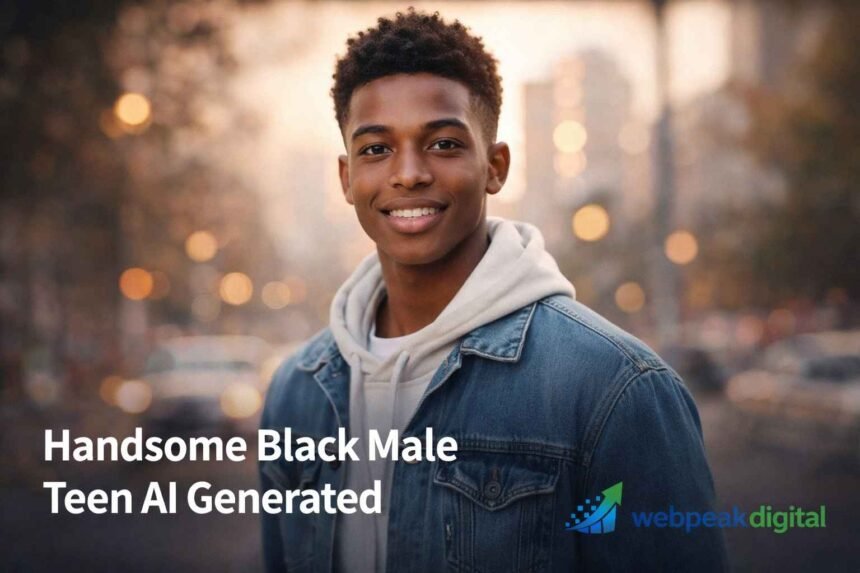
AI-generated images of people are now widely used across design, education, and media workflows. One specific area that raises both interest and responsibility is the use of handsome black male teen ai generated imagery. These visuals are entirely synthetic, yet they closely resemble real individuals, which makes clarity, ethics, and proper handling essential.
For professionals working with AI imagery, understanding how these images are created, why they are used, and where the boundaries lie is no longer optional. This topic sits at the intersection of technology, representation, and compliance, requiring practical knowledge rather than hype or assumptions.
What Does “AI-Generated Handsome Black Male Teen” Mean?
An AI-generated handsome Black male teen refers to a synthetic image created by an artificial intelligence system that visually represents a teenage Black male with conventionally attractive features.
The image does not depict a real person and is generated entirely from learned visual patterns.
These images are typically used in creative, educational, or testing environments where realism is needed without involving real individuals.
Definition in the Context of AI Image Generation
In AI image generation, this term describes a category of outputs defined by age, ethnicity, and appearance.
The AI combines visual traits based on statistical patterns rather than real identities.
Key characteristics include:
-
No real-world subject
-
Generated from probabilistic models
-
Controlled through text prompts and settings
How This Term Is Used in Creative and Technical Searches
The term is commonly used to narrow down image generation results or examples.
Users apply it to find visuals, prompt structures, or AI tools that can produce similar outputs.
It often appears in:
-
Prompt libraries
-
Image galleries
-
Technical documentation
Distinction Between Real Photos and Synthetic Images
Synthetic images differ from real photos because they have no underlying human subject.
This distinction affects consent, legal responsibility, and ethical handling.
Practical implications include:
-
No model release from a real person
-
Clear labeling requirements
-
Different risk profiles
What Is the Primary Search Intent Behind This Keyword?
The primary search intent is informational with a creative exploration focus.
Users want to understand what these images look like and how they are produced.
This intent is not purchase-driven and usually centers on learning or visual reference.
Informational vs. Creative Discovery Intent
Most users are exploring capabilities rather than seeking transactions.
They are evaluating realism, diversity, and output quality.
Intent signals include:
-
Browsing examples
-
Reviewing tools
-
Studying prompt behavior
Educational and Design-Related Use Cases
The keyword frequently appears in academic, design, or training contexts.
The focus is on safe visualization rather than public-facing content.
Common uses include:
-
Classroom demonstrations
-
UX persona testing
-
AI ethics discussions
What Users Typically Expect to Find
Users expect visuals, explanations, and guidance.
They are not expecting sales pages or stock-photo marketplaces.
Typical expectations:
-
Sample images
-
Prompt tips
-
Usage boundaries
How AI Image Generators Create Teen Portraits
AI image generators create teen portraits by converting text prompts into images through iterative prediction processes.
The system gradually refines visual elements until a coherent image emerges.
This process relies on learned patterns rather than stored photos.
Text-to-Image Model Fundamentals
Text-to-image models interpret language and translate it into visual structure.
They generate images step by step, refining pixels with each iteration.
Core stages include:
-
Prompt parsing
-
Visual prediction
-
Noise reduction
Role of Training Data and Style Parameters
Training data determines how faces, skin tones, and ages appear.
Style parameters adjust realism, lighting, and artistic tone.
Key influences:
-
Dataset diversity
-
Prompt specificity
-
Safety constraints
How Age, Appearance, and Ethnicity Are Rendered
Age and ethnicity are inferred through visual cues learned during training.
The AI combines facial proportions, skin tone, and contextual signals.
Accuracy depends on:
-
Clear age descriptors
-
Ethical dataset coverage
-
Platform safeguards
Who Uses AI-Generated Teen Images and Why?
AI-generated teen images are primarily used by professionals who need realistic visuals without involving real minors.
The goal is usually internal testing, education, or conceptual work.
Designers and Creative Professionals
Designers use these images for early-stage visual planning.
They help communicate ideas before committing to production.
Typical uses:
-
Mood boards
-
Character drafts
-
Concept validation
Educators and Researchers
Educators and researchers use synthetic images to avoid privacy concerns.
They support instruction and analysis without real-world exposure.
Common scenarios:
-
AI literacy training
-
Bias evaluation
-
Ethics case studies
Media, Marketing, and Concept Art Teams
Teams use AI portraits during ideation phases.
These images are usually not final deliverables.
Applications include:
-
Storyboarding
-
Pitch decks
-
Visual exploration
Why Representation Matters in AI-Generated Imagery
Representation affects how AI systems reflect society.
Poor representation can reinforce harmful assumptions or visual gaps.
Balanced outputs require intentional design and review.
Diversity and Inclusion in Synthetic Media
Inclusive datasets improve visual accuracy and fairness.
They reduce the risk of narrow or distorted portrayals.
Benefits include:
-
Broader realism
-
Reduced bias
-
Better usability
Avoiding Bias and Stereotyping
AI systems can unintentionally amplify stereotypes.
Prompt discipline and review mitigate this risk.
Common issues:
-
Overgeneralized features
-
Cultural clichés
-
Limited role depiction
Positive Representation of Black Youth
Respectful portrayals support ethical use.
Images should reflect normal, age-appropriate contexts.
Best practices include:
-
Neutral environments
-
Natural expressions
-
Everyday attire
Benefits of Using AI-Generated Teen Images
AI-generated teen images offer speed, flexibility, and reduced risk compared to real photography.
They are especially useful in controlled or internal environments.
Benefits for Designers and Content Creators
These images reduce dependency on photoshoots.
They allow rapid iteration at low cost.
Key advantages:
-
Fast turnaround
-
Customizable outputs
-
No location constraints
Benefits for Educational and Training Materials
Synthetic images avoid privacy and consent issues.
They are safer for repeated instructional use.
Benefits include:
-
Reusability
-
Policy alignment
-
Reduced liability
Benefits for Rapid Prototyping and Ideation
Teams can visualize ideas quickly.
This speeds up decision-making.
Results include:
-
Faster alignment
-
Clearer feedback
-
Lower revision costs
Ethical Considerations When Generating Teen Images
Ethical handling is essential when generating images of minors, even synthetic ones.
Misuse can still cause harm or reputational risk.
Age-Appropriate and Non-Exploitative Use
Teen images must remain neutral and respectful.
Adult framing is not acceptable.
Boundaries include:
-
Modest clothing
-
Neutral poses
-
Non-suggestive contexts
Consent, Privacy, and Synthetic Identity
Synthetic identity does not eliminate responsibility.
Misrepresentation can still mislead audiences.
Key safeguards:
-
Clear AI labeling
-
No personal backstories
-
No real-world identifiers
Platform Policies and Responsible Creation
Most platforms enforce strict content rules.
Ignoring them can result in access loss.
Responsible steps:
-
Review policies
-
Use safety filters
-
Document usage intent
Legal and Compliance Requirements to Be Aware Of
Legal standards around synthetic images of minors vary by jurisdiction.
Compliance depends on context, purpose, and distribution.
Regulations Around AI-Generated Images of Minors
Some laws focus on misuse rather than creation.
Others restrict specific visual contexts.
Key considerations:
-
Child protection laws
-
Content classification
-
Misrepresentation rules
Platform Terms of Service and Usage Rights
Each platform defines its own usage limits.
Commercial rights are often restricted.
Always confirm:
-
Licensing scope
-
Attribution rules
-
Prohibited use cases
Regional Differences in Compliance Expectations
Global use requires regional awareness.
Rules differ across markets.
Common regions to monitor:
-
United States
-
European Union
-
Asia-Pacific
Best Practices for Creating AI-Generated Teen Portraits
Best practices reduce risk and improve output quality.
They combine technical discipline with ethical review.
Writing Responsible and Clear Prompts
Clear prompts prevent unintended outputs.
Ambiguity increases risk.
Prompt guidelines:
-
Specify age clearly
-
Avoid adult descriptors
-
Define neutral settings
Setting Boundaries for Age and Appearance
Explicit boundaries help AI systems stay compliant.
Many tools offer built-in controls.
Recommended actions:
-
Enable moderation
-
Set age limits
-
Avoid vague language
Reviewing Outputs Before Use or Publication
Human review is mandatory.
Automated checks are not sufficient.
Review steps:
-
Visual inspection
-
Context validation
-
Policy alignment
Common Mistakes and Risks to Avoid
Most issues arise from speed or lack of oversight.
They are preventable with process discipline.
Misrepresenting AI Images as Real People
Presenting synthetic images as real is misleading.
It can create legal exposure.
Avoid:
-
Fake profiles
-
Realistic names
-
False narratives
Inappropriate Styling or Context
Styling choices can unintentionally sexualize or age up subjects.
Context must match age.
Risk examples:
-
Adult fashion
-
Nightlife scenes
-
Suggestive framing
Ignoring Ethical and Policy Guidelines
Skipping guidelines increases exposure.
Most failures are procedural.
Common causes:
-
No review process
-
Untrained staff
-
Policy blind spots
Tools and Platforms That Support Ethical AI Image Generation
Some platforms prioritize safety and compliance.
These tools are better suited for sensitive content.
Popular AI Image Generators with Safety Controls
Leading platforms include safeguards for minors.
These controls limit unsafe outputs.
Typical features:
-
Content moderation
-
Age detection
-
Prompt restrictions
Prompt-Based vs. Template-Based Tools
Prompt-based tools offer flexibility.
Template-based tools reduce risk.
Trade-offs include:
-
Control vs. creativity
-
Speed vs. precision
-
Risk vs. freedom
Features That Help Ensure Compliance
Compliance-focused features support governance.
They simplify audits and reviews.
Helpful features:
-
Prompt logs
-
Output history
-
User permissions
Actionable Checklist for Responsible Use
Structured checklists reduce error.
They support repeatable, safe workflows.
Pre-Generation Planning Checklist
Planning sets boundaries early.
Intent must be clear.
Checklist items:
-
Purpose defined
-
Audience identified
-
Policies reviewed
Review and Approval Checklist
Review prevents misuse.
Multiple reviewers improve accuracy.
Approval steps:
-
Visual review
-
Context check
-
Final authorization
Publishing and Attribution Checklist
Publication requires transparency.
Audiences must understand image origin.
Final checks:
-
AI label included
-
Rights confirmed
-
Context explained
How AI-Generated Teen Images Compare to Stock Photography
AI and stock photography serve different needs.
Choice depends on risk tolerance and use case.
Cost, Speed, and Customization
AI images are faster and cheaper at scale.
Stock images offer realism and legal clarity.
Comparison factors:
-
Budget
-
Timeline
-
Custom needs
Ethical and Legal Differences
Stock images involve real people.
AI images involve synthetic identities.
Key differences:
-
Consent handling
-
Licensing models
-
Exposure risk
When to Use AI vs. Traditional Stock
AI suits internal, exploratory work.
Stock suits public-facing content.
Decision drivers:
-
Audience sensitivity
-
Compliance needs
-
Brand exposure