

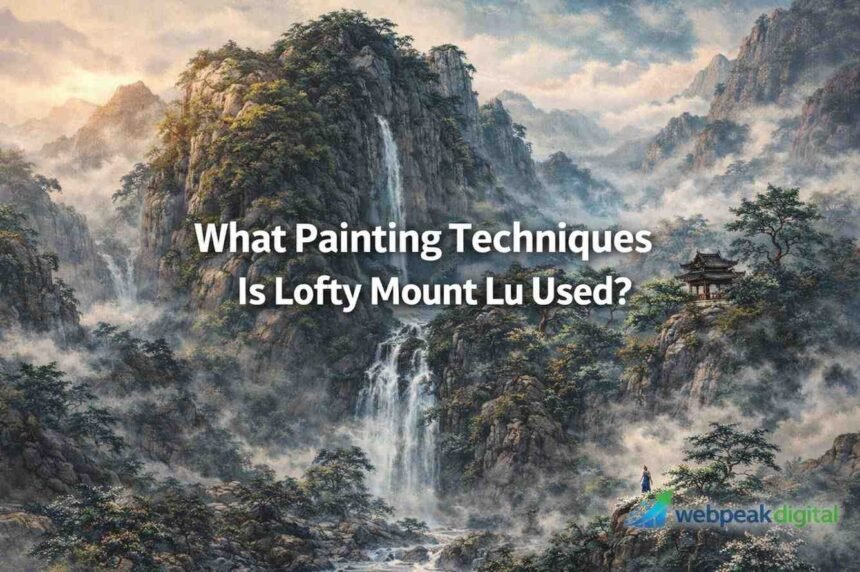
Lofty Mount Lu is one of the most studied landscape paintings in Chinese art, not because it looks realistic, but because of how deliberately it is constructed. Every brushstroke, ink wash, and compositional choice reflects a trained scholar’s mindset rather than a professional painter’s need for visual polish. To understand the painting, you have to look at how technique is used to communicate structure, discipline, and personal values.
When people ask what painting techniques is Lofty Mount Lu used, they are usually trying to understand how Shen Zhou built such depth, movement, and authority using mostly ink. The answer lies in a controlled combination of layered ink washes, texture strokes, and calligraphic brushwork, all rooted in the literati tradition. These techniques work together to create meaning first, and imagery second.
What Is Lofty Mount Lu in Chinese Art History?
Lofty Mount Lu is a Ming Dynasty literati landscape painting that represents moral character, artistic cultivation, and personal expression rather than a literal place.
It functions as both an artwork and a statement of scholarly values.
-
Created within the scholar-artist tradition
-
Uses landscape as symbolic language
-
Prioritizes meaning over visual realism
Who Created Lofty Mount Lu and When
Lofty Mount Lu was created by Shen Zhou in 1467 during the Ming Dynasty.
Shen Zhou was a central figure in literati painting and known for rejecting professional court norms.
-
Painted as a commemorative gift
-
Executed as a hanging scroll
-
Reflects mature literati practice
What the Painting Represents Culturally and Artistically
The painting represents ideals of integrity, restraint, and intellectual cultivation.
Mountains function as metaphors rather than geographic records.
-
Landscape symbolizes virtue and stability
-
Nature used to express inner values
-
Cultural meaning outweighs realism
Why Lofty Mount Lu Is Considered a Masterpiece
The work is considered a masterpiece due to its balance of technical discipline and expressive freedom.
It demonstrates control without rigidity.
-
Confident brush handling
-
Cohesive large-scale composition
-
Clear literati philosophy
What Painting Style Does Lofty Mount Lu Belong To?
The painting belongs to the shan shui literati landscape tradition.
This style focuses on conceptual nature rather than observed scenery.
-
Rooted in scholar culture
-
Emphasizes brush expression
-
Rejects decorative excess
Overview of Shan Shui (Mountain-Water) Landscape Painting
Shan shui painting represents imagined landscapes structured through brush rhythm.
Accuracy is less important than harmony.
-
Mountains and water as core forms
-
Space treated as an active element
-
Movement guides composition
Characteristics of Literati (Scholar-Artist) Painting
Literati painting prioritizes expression, education, and moral self-discipline.
Technique serves character.
-
Brushwork valued over finish
-
Poetry, calligraphy, and painting linked
-
Individual voice emphasized
How Shen Zhou’s Style Differs from Court Painters
Shen Zhou avoids polish and illusionistic realism common in court painting.
His work shows intentional restraint.
-
Minimal color usage
-
Visible brush marks
-
Expressive structure
What Core Painting Techniques Are Used in Lofty Mount Lu?
The painting relies on layered ink, texture strokes, and controlled brush pressure.
These techniques work together to create form, depth, and rhythm.
-
Ink replaces color modeling
-
Texture defines surfaces
-
Brush control governs clarity
Layered Ink Wash Technique
Ink is applied in multiple stages to build structure.
Each layer serves a specific role.
-
Light washes define form
-
Darker layers add mass
-
Dry and wet ink alternate
Texture Stroke Methods (Cun Fa)
Texture strokes describe rock surfaces through repeated movement.
They suggest structure rather than detail.
-
Short, rhythmic strokes
-
Direction aligns with form
-
Variation prevents flatness
Controlled Brush Pressure and Ink Density
Brush pressure determines ink flow and stroke weight.
This control creates visual hierarchy.
-
Firm pressure for solidity
-
Light pressure for distance
-
Density guides depth
How Are Mountains and Cliffs Painted in Lofty Mount Lu?
Mountains and cliffs are built through texture strokes and layered ink rather than outlines.
Structure emerges gradually.
-
No hard contours
-
Form created through repetition
-
Depth replaces detail
Use of Hemp-Fiber Texture Strokes
Hemp-fiber strokes create organic rock surfaces.
They convey erosion and age.
-
Long, fibrous lines
-
Direction reinforces slope
-
Texture remains expressive
Creating Depth Through Overlapping Ink Layers
Depth is created through tonal overlap instead of linear perspective.
Distance is implied, not measured.
-
Pale ink recedes
-
Dark ink anchors
-
Layers replace vanishing points
Structural Composition of Vertical Landscapes
The vertical format supports ascending mass.
The mountain rises through stacked zones.
-
Entry at the base
-
Visual weight at center
-
Resolution near the top
How Does Shen Zhou Use Brushwork to Convey Movement and Energy?
Brushwork conveys motion through rhythm and variation rather than depiction.
Movement is felt, not illustrated.
-
Strokes retain momentum
-
Lines remain active
-
Energy replaces realism
Calligraphic Brush Influence
Brushwork follows calligraphic principles.
Each stroke reflects trained control.
-
Continuous motion
-
Varied speed
-
Intentional endings
Variation of Line Weight and Rhythm
Line weight changes to avoid stagnation.
Rhythm unifies the surface.
-
Thick strokes stabilize
-
Thin strokes animate
-
Repetition builds cadence
Expressive Versus Realistic Brush Intent
Expression takes priority over accuracy.
Form serves meaning.
-
Suggestive shapes
-
Flexible proportions
-
Emotional clarity
What Role Does Ink Play Compared to Color in Lofty Mount Lu?
Ink is the primary structural medium, while color plays a minimal supporting role.
Meaning is carried through tone.
-
Ink defines form
-
Color avoids distraction
-
Restraint reflects values
Dominance of Ink Over Pigment
Ink constructs the entire landscape.
Color does not replace structure.
-
Tonal variation replaces shading
-
Brush skill remains visible
-
Form stays unified
Minimal Use of Color for Emphasis
Color is used selectively to guide attention.
It never dominates.
-
Light mineral tones
-
Strategic placement
-
Structural support only
Symbolic Meaning of Monochrome Ink
Monochrome ink reflects discipline and clarity.
It aligns with literati ethics.
-
Simplicity over excess
-
Inner meaning emphasized
-
Technique reflects character
How Does Composition Guide the Viewer’s Eye in the Painting?
Composition directs eye movement upward and inward.
The painting unfolds gradually.
-
Entry at foreground
-
Progression through layers
-
Resolution at height
Vertical Scroll Composition Techniques
The scroll format supports gradual visual ascent.
Movement mirrors physical climbing.
-
Bottom-to-top flow
-
Controlled pacing
-
Balanced density
Foreground, Middle Ground, and Background Separation
Spatial zones organize complexity.
Each zone serves a role.
-
Foreground anchors
-
Middle ground engages
-
Background dissolves
Visual Pathways Created by Waterfalls and Paths
Natural elements guide eye movement.
They connect spatial zones.
-
Vertical waterfalls reinforce ascent
-
Paths imply scale
-
Movement feels intentional
Why Are These Painting Techniques Important to Literati Art?
Technique is inseparable from moral expression in literati art.
How something is painted matters as much as what is painted.
-
Technique reflects discipline
-
Expression signals integrity
-
Art functions as self-cultivation
Expression of Moral Character Through Technique
Brush control mirrors personal restraint.
Skill implies character.
-
Controlled execution
-
Balanced expression
-
Visible discipline
Technique as an Extension of Poetry and Calligraphy
Painting shares tools and principles with writing.
All rely on brush mastery.
-
Unified aesthetic language
-
Shared discipline
-
Cross-medium expression
Artistic Freedom Versus Technical Precision
Freedom exists within control.
Rules guide without constraining.
-
Structure supports expression
-
Individual voice preserved
-
Precision serves meaning
What Influences Shaped the Techniques Used in Lofty Mount Lu?
The techniques reflect earlier literati traditions adapted to Shen Zhou’s voice.
Influence is present without imitation.
-
Historical reference
-
Personal interpretation
-
Selective adaptation
Influence of Yuan Dynasty Painters
Yuan painters emphasized expression over realism.
Shen Zhou builds on this approach.
-
Visible brushwork
-
Reduced color reliance
-
Conceptual space
Inspiration from Wang Meng’s Dense Landscape Style
Wang Meng’s density informs Shen Zhou’s textures.
Complexity remains controlled.
-
Layered strokes
-
Balanced density
-
Structural clarity
Personal Interpretation Rather Than Direct Imitation
Shen Zhou adapts rather than copies.
Technique remains personal.
-
Modified stroke usage
-
Individual rhythm
-
Distinct visual voice
How Does Lofty Mount Lu Compare to Other Chinese Landscape Paintings?
The painting differs in intent, execution, and philosophy from many earlier landscapes.
Expression replaces monumentality.
-
Less realism
-
More brush visibility
-
Stronger personal voice
Differences from Song Dynasty Monumental Landscapes
Song landscapes emphasize grandeur and precision.
This work emphasizes meaning.
-
Reduced architectural detail
-
Flexible scale
-
Expressive structure
Comparison with Other Works by Shen Zhou
The painting reflects Shen Zhou’s mature confidence.
Earlier works are more restrained.
-
Increased complexity
-
Stronger brush rhythm
-
Clear literati identity
Distinction from Decorative or Court Styles
Court painting prioritizes finish.
This work avoids ornamentation.
-
Minimal color
-
No illusionistic depth
-
Meaning-driven execution
Common Misunderstandings About the Painting Techniques Used
Misinterpretation often comes from applying Western standards.
Literati goals differ fundamentally.
-
Not realism-focused
-
Not decorative
-
Not technical display
Confusing Realism with Literati Expression
The painting is symbolic, not literal.
Accuracy is secondary.
-
Flexible proportions
-
Conceptual space
-
Expressive priority
Mislabeling Techniques as Decorative
Techniques serve structure and meaning.
Decoration is incidental.
-
Texture defines form
-
Ink creates depth
-
Brushwork conveys intent
Overlooking the Role of Calligraphy
Ignoring calligraphy obscures meaning.
Brush logic remains consistent.
-
Stroke rhythm matters
-
Line quality signals skill
-
Writing and painting align
What Tools and Materials Were Used to Execute These Techniques?
Tools are simple but require control.
Material choice affects outcome.
-
Brush, ink, surface
-
Technique dependent
-
Skill driven
Brush Types and Their Functional Roles
Different brushes serve specific tasks.
Selection shapes strokes.
-
Soft brushes for washes
-
Firm brushes for texture
-
Fine tips for detail
Ink Preparation and Inkstone Use
Ink tone is manually controlled.
Preparation affects clarity.
-
Thick ink for structure
-
Diluted ink for distance
-
Continuous adjustment
Paper or Silk Surface Considerations
Surface determines ink behavior.
Absorption changes results.
-
Paper diffuses ink
-
Silk sharpens edges
-
Choice aligns with intent
How Can Viewers Identify These Techniques When Analyzing the Painting?
Techniques are visible through close observation.
Brush behavior reveals method.
-
Stroke clarity
-
Tonal layering
-
Surface rhythm
What to Look for in Brush Strokes
Brush strokes show control and intent.
They reveal technique directly.
-
Varied thickness
-
Clear stroke endings
-
Directional consistency
How to Recognize Texture Stroke Patterns
Texture strokes repeat with variation.
They define surfaces.
-
Short rhythmic lines
-
Aligned directions
-
Controlled density
Identifying Ink Layering and Wash Control
Layering appears through tonal transitions.
Edges reveal skill.
-
Clean overlaps
-
Soft transitions
-
No muddiness
Frequently Asked Questions
What painting techniques is Lofty Mount Lu used?
Lofty Mount Lu is created using layered ink washes, texture stroke methods (cun fa), and controlled brush pressure rooted in literati painting practice. These techniques work together to build depth, structure, and expression without relying on strong color or realistic detail.
Is Lofty Mount Lu painted from a real location?
No, the painting is not a direct depiction of a specific place. It represents an idealized landscape shaped by artistic tradition, memory, and personal expression rather than physical observation.
Why does the painting rely so heavily on ink instead of color?
Ink allows the artist to show brush control, tonal variation, and rhythm more clearly than color. In literati art, ink is valued as a direct extension of calligraphy and personal discipline.
How can beginners recognize the main techniques in the painting?
Viewers can focus on visible brush strokes, repeated texture patterns on rocks, and gradual ink layering. These elements reveal how form and depth are constructed without outlines or shading.