

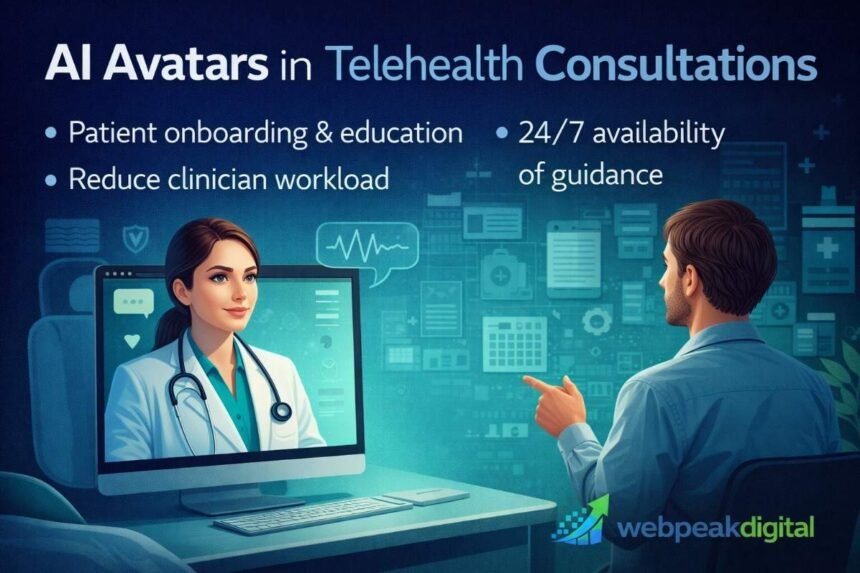
Telehealth has moved beyond basic video calls, and patient expectations have shifted with it. Many virtual care programs now struggle with scale, consistency, and clinician workload, especially during intake, education, and follow-up interactions.
This is where the best AI avatar creators for telehealth consultations are being explored—not as replacements for clinicians, but as structured tools to handle repeatable, non-clinical communication. When used correctly, AI avatars help standardize patient interactions, improve understanding, and reduce operational strain without crossing clinical boundaries.
As healthcare organizations adopt these systems, the focus is no longer on novelty. The real question is how AI avatars fit into regulated telehealth workflows, what problems they realistically solve, and where their limits must remain.
What Are AI Avatar Creators in Telehealth?
AI avatar creators in telehealth are platforms that generate digital, human-like avatars used to communicate with patients during virtual care interactions. They serve as a structured interface for delivering information, guiding workflows, and supporting patient engagement without replacing licensed clinicians.
These tools are designed for consistency, scale, and controlled communication in healthcare settings.
Definition of AI avatars in virtual healthcare
AI avatars in virtual healthcare are visual, voice-enabled digital agents designed to interact with patients in a clinically governed environment.
-
Use speech, facial animation, and scripted logic
-
Deliver approved medical or administrative information
-
Operate within defined safety and compliance limits
-
Support, rather than replace, human providers
They function as a patient-facing layer on top of telehealth systems.
How AI avatars differ from chatbots and virtual agents
AI avatars differ from chatbots because they add a visual, human-like presence to interactions.
-
Chatbots rely on text or voice alone
-
Avatars include facial expressions and lip-sync
-
Avatars improve comprehension and trust
-
Virtual agents may run invisibly in the background
The visual element changes how patients perceive and absorb information.
Common telehealth scenarios where avatars are used
AI avatars are most effective in predictable, repeatable telehealth scenarios.
-
Patient onboarding and intake guidance
-
Pre-visit instructions and consent explanations
-
Education for chronic conditions
-
Post-visit follow-up instructions
They are typically positioned before or after clinician involvement.
How AI Avatar Creators Work in Telehealth Consultations
AI avatar creators work by combining multiple AI systems into a controlled interaction flow that fits within clinical operations. Each component handles a specific task, from understanding patient input to delivering approved responses.
The process is designed to be predictable, auditable, and safe.
Core technologies behind AI avatars (NLP, speech, vision)
AI avatars rely on several core technologies working together.
-
Natural language processing interprets user input
-
Speech synthesis generates spoken responses
-
Computer vision animates facial movements
-
Rule-based logic controls response boundaries
These systems are usually connected through APIs.
Workflow: from patient interaction to clinical handoff
AI avatars follow structured workflows that end with human oversight.
-
Patient interacts through a telehealth interface
-
Avatar collects information using approved prompts
-
Data is structured and logged
-
Clinician receives a summarized handoff
Clinical responsibility always remains with licensed staff.
Real-time vs pre-recorded avatar interactions
AI avatars operate in either real-time or pre-recorded modes.
-
Real-time avatars respond dynamically to input
-
Pre-recorded avatars deliver fixed, approved messages
-
Real-time use fits intake and navigation
-
Pre-recorded use fits education and compliance
Many telehealth programs use both together.
Who Uses AI Avatars in Telehealth and Why
AI avatars are used by multiple stakeholders across the telehealth ecosystem to improve efficiency, access, and consistency. Each group benefits in different ways depending on their role.
Adoption is driven by scale and workflow pressure.
Healthcare providers and clinicians
Clinicians use AI avatars to reduce non-clinical workload.
-
Standardize explanations
-
Reduce repetitive patient questions
-
Improve intake documentation
-
Preserve time for clinical judgment
Avatars support care delivery without expanding scope.
Telehealth platform operators and startups
Platform operators use avatars to improve usability and scalability.
-
Improve onboarding completion rates
-
Reduce operational staffing needs
-
Offer multilingual experiences
-
Create consistent branded interactions
Avatars help platforms grow without linear cost increases.
Patients and caregivers as end users
Patients use avatars as guides through virtual care systems.
-
Easier navigation of digital tools
-
Clear, repeatable explanations
-
Reduced pressure during interactions
-
Support for caregivers managing care
Acceptance depends on clarity and trust.
Why AI Avatars Matter in Modern Telehealth
AI avatars matter because telehealth demand is growing faster than the healthcare workforce. They help bridge the gap between patient needs and provider capacity.
Their value lies in scale, not autonomy.
Addressing clinician shortages and burnout
AI avatars reduce strain on clinical teams by handling routine communication.
-
Offload repetitive explanations
-
Reduce administrative interruptions
-
Support extended virtual hours
-
Improve workload distribution
They help protect clinician capacity.
Improving patient engagement and accessibility
AI avatars improve engagement by making digital care easier to understand.
-
Visual and voice-based interaction
-
Support for low literacy users
-
Multilingual delivery
-
Patient-controlled pacing
Engagement improves when care feels guided.
Supporting scalable virtual care delivery
AI avatars allow telehealth services to scale consistently.
-
Handle large volumes simultaneously
-
Deliver uniform messaging
-
Reduce reliance on live staff
-
Support geographic expansion
Scalability is a core adoption driver.
Key Benefits of AI Avatar Creators for Healthcare Providers
For healthcare organizations, AI avatar creators offer operational and communication benefits. These benefits are process-driven rather than clinical.
They support efficiency without compromising oversight.
Operational efficiency and cost reduction
AI avatars reduce operational overhead in predictable workflows.
-
Fewer staff needed for intake and education
-
Reduced call center demand
-
Shorter visit times
-
More efficient clinician utilization
Savings come from process optimization.
Consistent patient communication
AI avatars deliver the same approved message every time.
-
Reduce variability across providers
-
Ensure compliance-aligned language
-
Support quality assurance efforts
-
Minimize miscommunication
Consistency is critical in regulated care.
Multilingual and inclusive care delivery
AI avatars support inclusive digital care at scale.
-
Multiple language support
-
Captioning and audio options
-
Adaptable pacing
-
Reduced reliance on live interpreters
This improves equity and access.
Patient-Centered Benefits of AI Avatars in Telehealth
From a patient perspective, AI avatars improve clarity, comfort, and availability. They do not replace clinicians but improve the experience around them.
Benefits are strongest in education and guidance.
Enhanced understanding of medical information
AI avatars help patients better understand care instructions.
-
Step-by-step explanations
-
Visual reinforcement
-
On-demand repetition
-
Reduced information overload
Understanding improves adherence.
Reduced anxiety during virtual consultations
AI avatars reduce stress by offering predictable interactions.
-
No fear of asking basic questions
-
Calm, neutral tone
-
Patient-controlled pacing
-
Clear escalation paths
Lower anxiety improves engagement.
24/7 access to guided health interactions
AI avatars provide always-on support within limits.
-
Available outside clinic hours
-
Immediate guidance
-
Clear boundaries and escalation
-
Consistent experience across time zones
Availability improves perceived access.
Best Practices for Using AI Avatars in Telehealth
Effective use of AI avatars requires clear boundaries, thoughtful design, and strong system integration. Poor implementation increases risk.
Best practices focus on governance and usability.
Defining appropriate clinical and non-clinical use cases
AI avatars should be assigned clearly defined roles.
-
Education and intake
-
Navigation and reminders
-
No diagnosis or treatment decisions
-
Mandatory escalation rules
Scope control protects safety.
Designing avatars for trust and empathy
Avatar design directly affects patient acceptance.
-
Professional, neutral appearance
-
Natural speech patterns
-
Minimal exaggerated expressions
-
Context-appropriate tone
Trust is built through restraint.
Integrating avatars with existing telehealth systems
Integration determines operational value.
-
Connect to scheduling and intake tools
-
Pass structured data to EHRs
-
Align with authentication systems
-
Maintain audit logs
Poor integration limits usefulness.
Compliance, Privacy, and Ethical Considerations
AI avatars in telehealth operate within strict regulatory and ethical constraints. Responsibility for compliance remains with the healthcare organization.
Governance must be proactive.
HIPAA, GDPR, and healthcare data protection
AI avatars must comply with healthcare data laws.
-
Encrypted data handling
-
Minimal data collection
-
Vendor compliance verification
-
Defined retention policies
Compliance cannot be delegated away.
Clinical safety and scope-of-practice boundaries
AI avatars must stay within non-clinical roles.
-
No independent medical advice
-
Pre-approved content libraries
-
Clear escalation triggers
-
Regular clinical review
Safety boundaries are essential.
Transparency and informed patient consent
Patients must understand AI involvement.
-
Clear disclosure of AI use
-
Plain-language explanations
-
Opt-out options where possible
-
Documented consent
Transparency supports trust.
Common Risks and Mistakes When Using AI Avatars
Most failures with AI avatars come from overreach or poor design. These risks are avoidable with proper governance.
Mistakes usually stem from unrealistic expectations.
Over-reliance on avatars for clinical decision-making
Using avatars beyond their role creates risk.
-
Missed clinical nuance
-
Delayed escalation
-
Regulatory exposure
-
Patient safety issues
Avatars must not replace judgment.
Poor avatar realism or communication quality
Low-quality execution undermines credibility.
-
Unnatural speech
-
Poor lip-sync
-
Inconsistent tone
-
Confusing language
Quality directly affects trust.
Ignoring patient trust and cultural factors
Cultural mismatch reduces adoption.
-
Inappropriate visuals
-
Insensitive language
-
One-size-fits-all design
-
Lack of user testing
Cultural context matters.
Evaluation Criteria for the Best AI Avatar Creators
Selecting an AI avatar platform requires structured evaluation. Visual quality alone is not sufficient.
Operational fit is often more important.
Avatar realism and interaction quality
Realism affects engagement and clarity.
-
Natural voice and pacing
-
Accurate facial animation
-
Clear audio output
-
Responsive interaction flow
Higher quality improves usability.
Integration capabilities and APIs
Integration determines long-term viability.
-
Telehealth and EHR compatibility
-
API flexibility
-
Data logging and export
-
Access control features
Integration often outweighs aesthetics.
Scalability, customization, and pricing models
Sustainable use depends on scale and cost.
-
High-volume interaction support
-
Custom branding options
-
Predictable pricing
-
Clear usage limits
Hidden constraints create future issues.
Comparison of AI Avatar Creators for Telehealth Use
Different approaches suit different organizational needs. Comparison helps clarify trade-offs.
There is no universal best option.
General-purpose avatar tools vs healthcare-focused platforms
These tools serve different priorities.
-
General tools focus on content creation
-
Healthcare platforms prioritize compliance
-
Healthcare tools offer governance features
-
General tools require more customization
Risk tolerance guides the choice.
AI avatars vs text-based virtual assistants
Each approach has advantages.
-
Avatars improve engagement and understanding
-
Text assistants are simpler and cheaper
-
Avatars suit education-heavy workflows
-
Text fits quick transactional tasks
Many systems use both.
Build vs buy considerations for telehealth teams
Organizations must choose between custom and vendor solutions.
-
Building offers control but higher cost
-
Buying accelerates deployment
-
Vendor lock-in is a risk
-
Internal governance capacity matters
Decision depends on scale and maturity.
Implementation Checklist for Telehealth Teams
Successful implementation requires preparation, oversight, and measurement. Skipping steps increases risk.
Checklists help ensure readiness.
Technical and infrastructure readiness
Teams must confirm technical foundations.
-
Secure hosting environment
-
Identity and access management
-
API integration capability
-
Monitoring and logging tools
Infrastructure gaps cause downstream problems.
Clinical governance and oversight
Governance ensures safe operation.
-
Clinical review committees
-
Approved content libraries
-
Ongoing audits
-
Clear ownership
Governance must be formalized.
Pilot testing and performance measurement
Pilots reduce deployment risk.
-
Limited initial rollout
-
Defined success metrics
-
Patient feedback loops
-
Iterative improvements
Measurement should focus on outcomes.
Future Trends in AI Avatars for Telehealth (2026 and Beyond)
AI avatars will become more capable, but also more regulated. Progress will focus on context awareness and system integration.
Governance requirements will increase.
Real-time conversational and emotional AI
Future avatars will better adapt to patients.
-
Emotion-aware responses
-
Improved turn-taking
-
Context-sensitive tone
-
Better ambiguity handling
Capability increases must be balanced with controls.
Integration with EHRs and clinical decision support
Deeper system integration is expected.
-
Structured data entry
-
Context-aware prompts
-
Clinician review support
-
Workflow alignment
Integration defines clinical usefulness.
Regulatory evolution and standardization
Regulation will become clearer and stricter.
-
Defined acceptable use cases
-
Certification frameworks
-
Audit requirements
-
Standardized disclosures
Organizations should plan ahead.
Frequently Asked Questions
Are AI avatars allowed to provide medical advice?
AI avatars are generally not allowed to provide independent medical advice. In regulated telehealth environments, they are limited to delivering pre-approved information, guiding workflows, and supporting education or intake. Any activity that involves diagnosis, treatment decisions, or clinical judgment must be handled by licensed healthcare professionals, with clear escalation paths built into the system.
How accurate are AI avatars in patient interactions?
AI avatars are accurate when used for structured, well-defined tasks such as patient education, intake questions, consent explanations, and navigation. Their reliability depends on the quality of the scripts, governance controls, and clinical review processes behind them. They are not designed to interpret complex symptoms or replace human clinical reasoning.
What are the best AI avatar creators for telehealth consultations actually used for in practice?
In practice, the best AI avatar creators for telehealth consultations are used to handle repeatable communication tasks rather than direct care delivery. Common uses include onboarding new patients, explaining care instructions, supporting chronic condition education, and guiding users through virtual care platforms. Their value comes from consistency, availability, and scale, not from autonomous decision-making.