
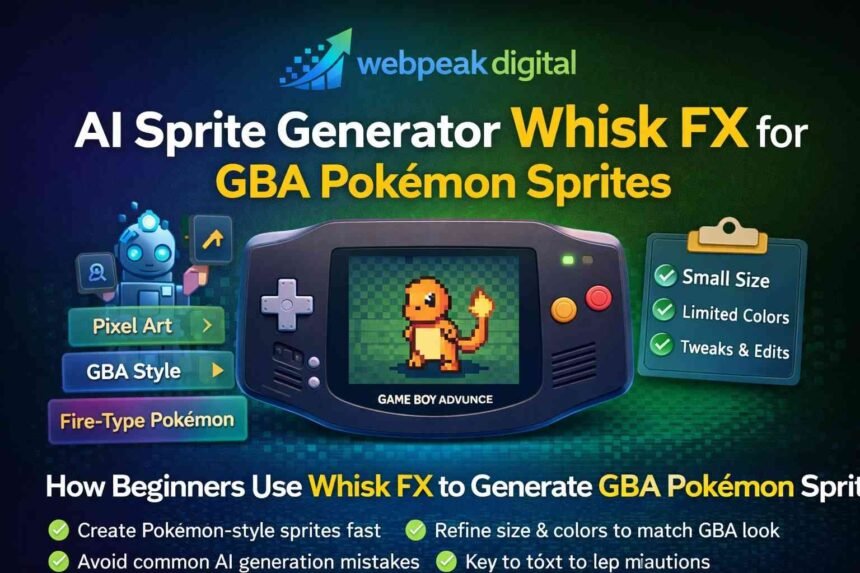
Creating GBA-style Pokémon sprites used to take a lot of time and patience. You either had to learn pixel art from scratch or spend hours tweaking tiny details. Today, AI tools make it possible to generate sprites much faster, even if you’ve never drawn anything before. That’s why many beginners are exploring ai sprite generator whisk fx gba pokemon sprite.
If you’re wondering right now whether Whisk FX can actually produce Pokémon-style pixel sprites and how to use it without feeling overwhelmed you’re in the right place. This guide walks you through the process step by step, in plain language, so you can get usable results without guessing or frustration.
What an AI Sprite Generator Is for GBA Pokémon Sprites
An AI sprite generator is a tool that uses artificial intelligence to create small pixel images, also called sprites, so you don’t have to draw them by hand. For GBA Pokémon sprites, the goal is to match the classic Game Boy Advance look low resolution, limited colors, and simple, readable shapes.
Instead of placing each pixel yourself, you describe what you want and let the AI generate a sprite from that description. Most tools rely on text prompts like “fire-type lizard Pokémon, GBA style, pixel art.”
From experience, these tools work best when you treat them as helpers, not replacements for artists. If you’re making a fan game or testing ideas, an AI sprite generator can give you a strong starting point in minutes instead of hours.
What Whisk FX Is and How It Generates Pixel Art
Whisk FX is an AI image tool that creates visuals from written descriptions, including images that resemble pixel art. It doesn’t manually place pixels the way a human sprite artist does. Instead, it learns patterns from many images and tries to recreate the style of pixel art when you ask for it.
This is why prompts matter so much. Using phrases like “GBA style,” “pixel art,” “16-bit,” or “Pokémon-like sprite” helps guide the AI toward smaller, blockier images with simpler shading.
One important thing to understand early: Whisk FX works best as a starting point. Many experienced users generate a sprite that looks mostly right, then clean it up or resize it afterward. Even with a bit of editing, this approach is still much faster than drawing from scratch.
Whether Whisk FX Can Create Authentic GBA Pokémon-Style Sprites
Whisk FX can create sprites that look close to GBA Pokémon style, but it’s important to keep expectations realistic. The AI understands the general look small sprites, pixilated shapes, simple shading but it doesn’t always follow the strict rules the original games used.
At first glance, a sprite may feel “Pokémon-like,” but you might notice issues such as extra colors, uneven outlines, or slightly blurry pixels. This happens because Whisk FX imitates pixel art rather than constructing it pixel by pixel.
In practice, being very specific helps a lot. Prompts like “front-facing GBA Pokémon sprite, 64×64 pixels, and limited color palette” usually lead to better results. The closer you guide the AI to real GBA limits, the more authentic the sprite will look.
What You Need to Use Whisk FX as a Beginner
To get started with Whisk FX, you only need three things: access to the tool, a basic idea of what you want to create, and some patience while testing prompts. No drawing skills or technical background are required.
It also helps to understand a few basic terms like pixel art, GBA style, and sprite size. Knowing these lets you explain your idea more clearly, which prevents the AI from guessing too much.
A common beginner mistake is writing overly long prompts right away. In reality, simple prompts like “grass-type Pokémon, GBA pixel art, and front view” often work better. You can always add details after seeing the first result.
Step-by-Step Process to Generate GBA Pokémon Sprites Using Whisk FX
Start by opening Whisk FX and creating a new image from text. This is where you’ll describe the sprite you want.
Next, write a short, clear prompt that includes key style words like pixel art, GBA style, and Pokémon-like sprite. For example:
“Small fire-type creature, GBA Pokémon style, pixel art, front-facing sprite.”
Generate the image and review the result closely. If it looks too smooth or detailed, add limits like “low resolution” or “limited color palette,” then try again.
From experience, most beginners get their best sprite on the third or fourth attempt. Small refinements work better than rewriting the entire prompt each time.
Effective Prompt Examples for GBA Pokémon Sprite Generation
Strong prompts focus on style and limits, not long descriptions. A reliable example looks like this:
“Front-facing water-type creature, GBA Pokémon style, pixel art, 64×64 sprite, limited colors.”
If the sprite looks too modern, add terms like “16-bit” or “retro.” If it looks messy, remove extra details and simplify.
A practical habit that helps a lot: change only one thing at a time in your prompt. This makes it easier to understand what actually improves the sprite instead of guessing.
Recommended Image Settings for GBA Pokémon Pixel Art
GBA Pokémon sprites look best when image settings stay small and simple. Large images tend to look like regular AI art instead of true pixel sprites.
When possible, aim for sizes close to classic dimensions, such as 64×64 pixels, and use a limited color palette.
If Whisk FX doesn’t let you lock the size exactly, generate the image slightly larger and scale it down afterward. Many experienced users do this because shrinking the image often sharpens the pixels and improves the retro feel.
Common Problems When Generating Pokémon Sprites with AI
A very common issue is blurry sprites. This usually means the AI created standard artwork and then scaled it down. Adding “pixel art” and “low resolution” to your prompt usually helps.
Another issue is too many colors or messy outlines. Real GBA sprites use a small color range and clean edges, but AI won’t always follow that unless you tell it clearly.
Instead of starting over, try small fixes. Adding “limited color palette” or “simple shading” often corrects problems without losing a good base sprite.
How to Improve and Refine AI-Generated GBA Pokémon Sprites
The fastest way to improve a sprite is to tweak it instead of replacing it. Once you get something close, small changes make a big difference.
You can refine results by slightly adjusting the prompt or opening the image in a simple pixel editor to clean stray pixels or sharpen outlines.
For example, if the sprite shape looks good but the colors feel off, keep the image and reduce the color count manually. This usually takes just a few minutes and can turn a rough sprite into a usable one.
Comparison of Whisk FX and Other AI Pokémon Sprite Generators
Whisk FX is one of several AI tools that can generate pixel art. Some tools are designed specifically for sprites and game assets, while others are general image generators you guide into producing pixel art.
Compared to broad AI image tools, Whisk FX often delivers faster results with a more consistent style when you include “GBA” or “pixel art” in your prompts. Sprite-focused tools may offer stricter controls for size and colors, which can be useful for polished game projects.
In practice, Whisk FX is easier for beginners. Later on, combining a sprite-specific tool with basic editing software can give you more control when you need it.
Legal and Usage Considerations for AI-Generated Pokémon Sprites
Pokémon is a protected brand, so AI-generated sprites that resemble Pokémon should be used carefully. Even if an AI creates the image, the style and concept are still connected to a company that owns the rights.
For personal projects, learning, or non-commercial fan games, most people use these sprites without issues. Problems usually arise when someone tries to sell a game or artwork that closely copies official Pokémon designs.
A safer route is to create original creatures inspired by Pokémon rather than direct copies. This gives you more freedom and avoids legal risks later.
Common Beginner Mistakes to Avoid
- Using very large image sizes
- Writing overly long prompts
- Expecting perfect results on the first try
- Ignoring color limits
- Not refining good results
Quick Beginner Checklist
- Use “pixel art” and “GBA style” in prompts
- Keep sprites small (around 64×64)
- Limit colors and shading
- Refine prompts slowly
- Clean up sprites if needed
FAQs
Can beginners really use Whisk FX for Pokémon sprites?
Yes. You don’t need art skills just simple prompts and a bit of patience.
Does Whisk FX make perfect GBA sprites?
Not always. It usually creates a strong base that may need light cleanup.
How many tries does it usually take?
Most users get good results after 3–5 prompt adjustments.
Can I use these sprites in a game?
For personal or non-commercial projects, usually yes. Commercial use is risky if designs copy Pokémon too closely.
Is editing AI sprites allowed?
Yes, and it’s recommended. Small edits improve quality and originality.