
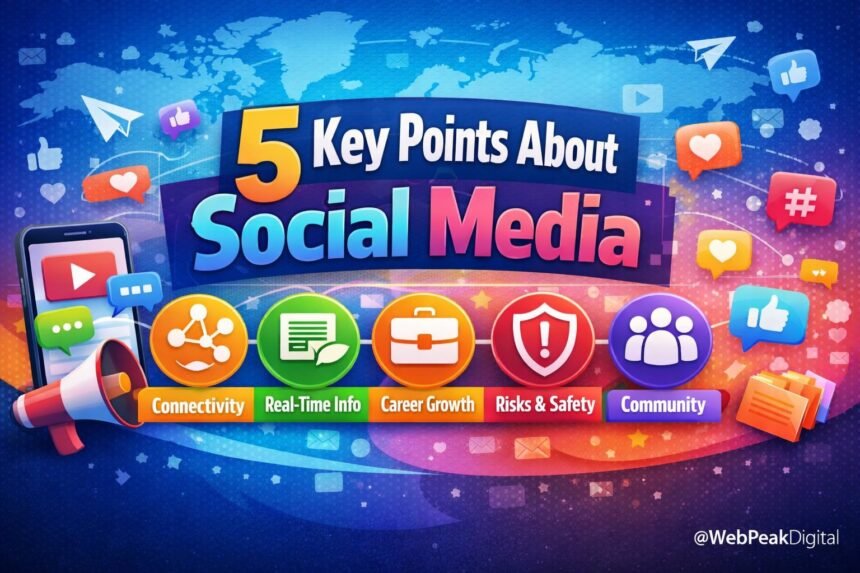
Social media has become an integral part of modern communication, connecting individuals, communities, and businesses worldwide. Understanding its impact requires clarity on how it functions and influences society. The 5 key points about social media highlight its essential benefits, risks, and practical applications, offering a clear framework for users and organizations to navigate this digital ecosystem effectively.
Beyond connectivity, social media serves as a tool for learning, professional development, and community engagement. From sharing real-time information to supporting creative expression, these platforms influence personal and professional spheres alike. By examining its roles, benefits, and challenges, users can leverage social media responsibly while maximizing its potential.
Understanding Social Media
What Is Social Media? Definition and Scope
Social media consists of digital platforms where people can produce, share, and engage with various types of content.
- It enables communication across individuals, groups, and organizations.
- Platforms support text, images, video, and live content.
- Social media also facilitates professional networking, learning, and real-time collaboration.
Evolution of Social Media Platforms Over Time
Social media has evolved from basic networking to multi-functional ecosystems.
- Early platforms like Friendster and MySpace focused on personal networking.
- Facebook and LinkedIn introduced professional and community-driven features.
- Modern platforms integrate e-commerce, live streaming, AI recommendations, and short-form video.
Key Types of Social Media (Networking, Content, Messaging)
Social media can be categorized based on its primary purpose.
- Networking platforms: Facebook, LinkedIn – connect users and communities.
- Content platforms: YouTube, Instagram – focus on publishing and sharing multimedia.
- Messaging platforms: WhatsApp, Telegram – enable direct communication and group discussions.
How Social Media Works
Algorithms and Content Distribution
Algorithms control what content users see, based on relevance and engagement.
- Content is ranked using likes, shares, comments, and user history.
- Platforms aim to maximize user retention by promoting personalized content.
- Businesses and creators can leverage analytics to optimize reach.
User Engagement and Interaction Mechanisms
Social media engagement is driven by interaction features.
- Users like, comment, share, or react to posts.
- Features like polls, stories, and live sessions increase active participation.
- Engagement metrics guide content strategies and platform visibility.
Virality and Trend Propagation
Content spreads quickly when it resonates with audiences.
- Viral posts often combine emotion, relatability, or entertainment.
- Trending hashtags and challenges accelerate visibility.
- Influencers and high-engagement users amplify reach organically.
Roles and Responsibilities of Users
Personal Users: Sharing and Interaction Etiquette
Individuals must share responsibly and maintain respectful interactions.
- Verify information before posting or sharing.
- Avoid excessive personal disclosure that may compromise privacy.
- Engage constructively in conversations and debates.
Business Users: Branding and Audience Engagement
Organizations are responsible for maintaining professional presence.
- Post consistent, accurate, and brand-aligned content.
- Respond promptly to customer queries and feedback.
- Monitor brand sentiment and adjust messaging accordingly.
Influencers and Content Creators: Ethical Practices
Creators have a duty to uphold transparency and integrity.
- Disclose partnerships and sponsorships clearly.
- Avoid promoting harmful or misleading products.
- Respect intellectual property and community standards.
Why Social Media Matters
Impact on Communication and Society
Social media reshapes how people communicate globally.
- Facilitates instant sharing of news and personal updates.
- Enables civic engagement and social movements.
- Connects diverse communities across geographic boundaries.
Role in Education and Learning
Social media supplements formal and informal learning.
- Offers access to tutorials, courses, and expert discussions.
- Encourages collaborative learning through groups and forums.
- Provides real-time feedback and knowledge sharing.
Contribution to Business Growth and Marketing
Social media drives visibility, engagement, and revenue.
- Brands can target precise demographics using analytics.
- Platforms allow direct sales and lead generation.
- Customer feedback and reviews inform product improvements.
Key Benefits of Social Media
Connectivity and Networking Opportunities
Social media removes geographic barriers for connections.
- Users maintain relationships across locations.
- Professional networking platforms facilitate career growth.
- Communities of interest form around hobbies, professions, or causes.
Access to Real-Time Information
Information spreads instantly through social platforms.
- News, alerts, and updates are accessible immediately.
- Organizations can monitor trends to respond promptly.
- Users can filter content to stay informed about specific topics.
Professional Development and Career Growth
Social media supports skill building and professional visibility.
- LinkedIn and niche platforms highlight expertise and achievements.
- Online workshops, webinars, and discussions enhance knowledge.
- Networking can lead to job opportunities and mentorship.
Community Building and Social Support
Social platforms host support networks for shared experiences.
- Users join interest-based groups or peer communities.
- Platforms facilitate charitable initiatives and social campaigns.
- Collective knowledge and problem-solving are encouraged.
Common Risks and Challenges
Privacy and Security Concerns
Social media can put personal information at risk of being accessed or exploited.
- Users risk identity theft or hacking if security settings are weak.
- Organizations must safeguard customer data.
- Regular audits and privacy awareness reduce vulnerability.
Misinformation and Fake News
False or misleading content spreads easily.
- Fact-checking tools help verify accuracy.
- Platform reporting features can reduce circulation of fake content.
- Users should rely on verified sources for critical information.
Mental Health Implications
Excessive social media use can affect well-being.
- Comparison and validation-seeking behaviors can increase stress.
- Overuse may contribute to anxiety, sleep disruption, or social withdrawal.
- Time management and mindful engagement mitigate negative effects.
Best Practices for Using Social Media
Creating Effective and Engaging Content
High-quality content attracts and retains audiences.
- Focus on clarity, relevance, and value.
- Use multimedia elements like images, videos, or infographics.
- Monitor engagement metrics to refine future posts.
Maintaining Privacy and Digital Safety
Users and organizations should protect sensitive information.
- Adjust privacy settings regularly.
- Avoid sharing sensitive personal or financial data.
- Educate teams on secure communication practices.
Responsible Posting and Interaction
Responsible interaction ensures credibility and safety.
- Avoid inflammatory or offensive content.
- Verify facts before sharing.
- Respect community guidelines and copyright rules.
Tools, Platforms, and Techniques
Analytics and Performance Tracking Tools
Tracking engagement informs strategy.
- Tools like Google Analytics and platform dashboards measure reach and interaction.
- Analyze which content resonates with target audiences.
- Regular reporting helps optimize posting schedules.
Scheduling and Content Management Platforms
Automation improves efficiency.
- Platforms like Hootsuite or Buffer schedule posts across channels.
- Content calendars help maintain consistency.
- Bulk scheduling reduces manual errors and missed deadlines.
Trend Monitoring and Social Listening
Monitoring trends identifies opportunities and risks.
- Track hashtags, keywords, and sentiment analysis.
- Social listening tools detect emerging topics and feedback.
- Responding promptly strengthens engagement and reputation.
Compliance, Regulations, and Ethics
Legal Considerations for Businesses
Organizations must comply with local and international regulations.
- Data protection laws govern storage and use of personal information.
- Advertising disclosures and intellectual property rules must be followed.
- Non-compliance can result in fines or reputational damage.
Advertising and Platform Policies
Each platform has specific rules for promotions.
- Paid content must meet disclosure and transparency standards.
- Avoid prohibited products or practices.
- Stay updated on policy changes to maintain account integrity.
Ethical Guidelines for Influencers
Influencers must uphold credibility with audiences.
- Clearly label sponsored content or affiliate promotions.
- Avoid promoting unsafe or unethical products.
- Engage authentically and maintain trust with followers.
Actionable Checklists
Daily Social Media Usage Checklist
Maintain consistent and safe activity with this checklist:
- Check notifications and respond to messages.
- Review privacy settings daily.
- Monitor trending topics for relevance.
- Limit time spent to avoid burnout.
Content Strategy Checklist for Businesses
Ensure effective content planning and execution:
- Define target audience and goals.
- Schedule posts and campaigns in advance.
- Track engagement and adjust strategies.
- Ensure compliance with platform rules.
Risk Management Checklist
Mitigate potential issues with social media risks:
- Regularly audit account security.
- Monitor mentions for reputational risk.
- Establish protocols for misinformation or negative publicity.
- Train teams on responsible usage and crisis response.
Comparisons and Alternatives
Social Media vs. Traditional Media
Social media offers interactivity traditional media cannot.
- Users engage in two-way communication, unlike TV or print.
- Content can be updated in real-time.
- Costs are generally lower with targeted reach.
Paid Social Media vs. Organic Reach
Paid campaigns accelerate visibility, but organic content builds credibility.
- Paid: Fast results, precise targeting, measurable ROI.
- Organic: Slower growth, relies on engagement, trusted by audiences.
- Balanced strategies use both approaches.
Platform Comparisons: Facebook, Instagram, TikTok, LinkedIn
Different platforms serve different objectives:
- Facebook: Broad reach, community groups, ads.
- Instagram: Visual content, brand storytelling, influencer marketing.
- TikTok: Short-form video, viral trends, younger audiences.
- LinkedIn: Professional networking, B2B marketing, thought leadership.
Common Mistakes to Avoid
Oversharing Personal Information
Sharing too much can compromise privacy and security.
- Avoid posting addresses, phone numbers, or financial data.
- Limit public visibility of personal life.
- Use platform privacy tools effectively.
Ignoring Analytics and Engagement Metrics
Not monitoring metrics reduces strategy effectiveness.
- Track likes, shares, comments, and impressions.
- Adjust content types based on performance.
- Use data to inform future campaigns and posts.
Neglecting Community Guidelines
Violating rules can lead to account suspension or bans.
- Review platform terms regularly.
- Ensure content aligns with community standards.
- Educate teams on acceptable behavior and posting limits.
Frequently Asked Questions (FAQs)
What are the 5 key points about social media that everyone should know?
These five points cover connectivity, real-time information, professional growth, community support, and awareness of risks. They provide a clear framework for using social media effectively and responsibly.
How does social media impact professional development and career growth?
Social media allows users to network, showcase skills, join industry groups, and access learning resources. Platforms like LinkedIn enable professionals to connect with potential employers and mentors.
What are the common risks associated with social media use?
Risks include privacy breaches, exposure to misinformation, and negative mental health effects. Awareness and responsible usage help mitigate these challenges.
Which social media platforms are best for business marketing?
Facebook, Instagram, LinkedIn, and TikTok are widely used. Each platform has unique features for audience engagement, advertising, and content sharing, depending on the target demographic.
How often should individuals or businesses post on social media?
Posting frequency varies by platform and goals. Consistency is key: typically 1–2 posts daily on Facebook and Instagram, 2–5 posts weekly on LinkedIn, and 1–3 posts daily on TikTok, while monitoring engagement to adjust strategy.